Female Hair Transplants in Turkey: Why More Women Are Choosing Surgery

Share

Why Female Hair Transplants Are Quietly Growing in Popularity
For decades, hair loss has been framed as a distinctly male problem as the subject of jokes, comb-overs, and an entire industry of concealer sprays marketed almost exclusively to men. But the reality has always been different. An estimated one in three women will experience noticeable hair thinning at some point in their lives, whether through genetics, hormonal changes, stress, or postpartum shedding. What’s changed recently isn’t the prevalence but the silence around it.
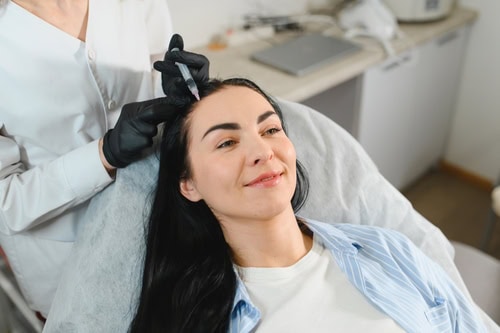
Social media has played an unlikely role in that shift. Where hair loss was once something women hid under scarves, clip-in extensions, and careful parting, a new wave of creators and public figures has started talking openly about thinning hairlines and diffuse shedding, treating it as a health topic rather than a source of shame. That openness has had a knock-on effect: search interest in female-specific hair restoration options has climbed steadily over the past few years, and with it, a wave of women exploring surgical solutions that were, until recently, marketed almost entirely to men.
Which brings us to Turkey. Istanbul has spent the past decade building a reputation as the world’s most established destination for a hair transplant in Turkey, driven by a combination of specialist surgeons, high procedure volumes, and pricing that undercuts the UK and US by a significant margin. What’s newer is how much of that infrastructure has adapted specifically for women.
Female hair loss doesn’t usually look like the male pattern most people picture which is a receding hairline or a bald crown. It’s typically diffuse, spread more evenly across the scalp, which makes it harder to treat with a one-size-fits-all approach. In response, clinics across Istanbul have leaned into techniques like unshaven FUE and DHI, which allow follicles to be transplanted without cutting a patient’s existing hair short, a detail that matters enormously for anyone not looking to explain a sudden buzzcut to their colleagues.
“We’ve seen a genuine shift in who’s booking consultations,” says one clinic representative from BlueMagic Group, an Istanbul-based provider that has expanded its hair transplant for women program in response to rising demand. “A few years ago, female patients were a small minority. Now they’re one of the fastest-growing groups we see.”
Part of that growth is simply awareness, as women now know surgical options exist and aren’t limited to men. But part of it is also technical: as diagnostic tools have improved, clinics have gotten better at identifying which patients are strong candidates for transplantation versus those whose hair loss stems from causes a transplant won’t fix, like active telogen effluvium or certain autoimmune conditions. That more careful screening process has, if anything, made the procedure more credible as a genuine medical option rather than a cosmetic gamble.

None of this makes the decision a small one. A hair transplant is still a surgical procedure, with real recovery time, real cost, and results that take the better part of a year to fully appear. Anyone considering it, in Turkey or anywhere else, should expect a thorough consultation, a clear breakdown of what’s included in the price, and an honest conversation about whether they’re actually a good candidate, not just a paying one.
What does seem clear is that the stigma is fading faster than the hair loss itself. As more women speak openly about thinning hair and more clinics build procedures specifically designed around female patterns of loss, what was once a quiet, private struggle is becoming a much more ordinary conversation and, for a growing number of women, a solvable one.