
Furniture for Small Spaces: Smart Ideas for Unique City Homes

Share
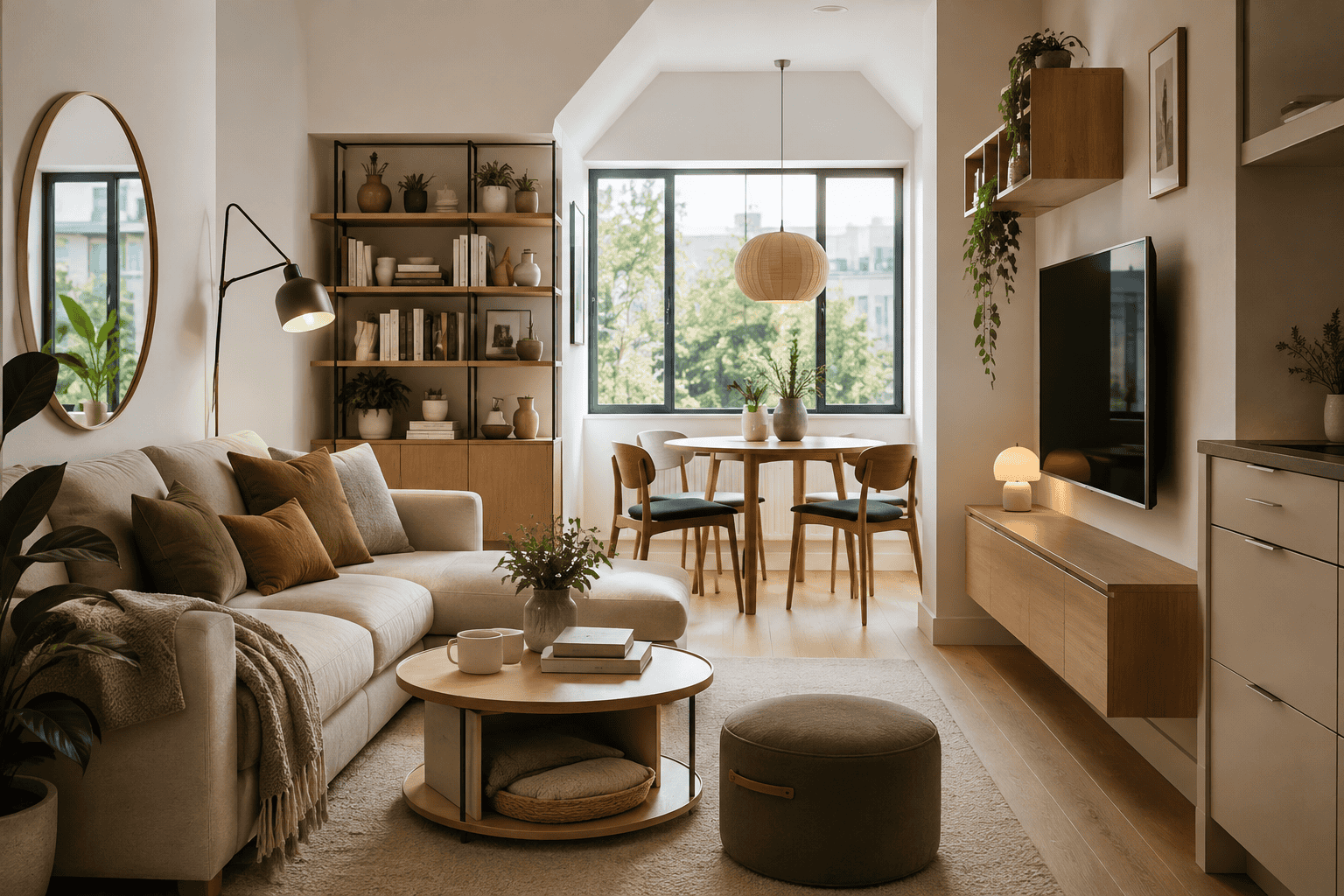
How to Choose the Right Furniture for Small and Awkward Spaces
Living in the city often means making a home in all sorts of interesting places, from tiny new-builds to quirky converted flats with unusual layouts. These unique urban spots, with their nooks, sloped ceilings, and odd-shaped rooms, are actually a fantastic chance to get creative. Instead of seeing these features as problems, you can use them as a springboard to create a home that’s truly just for you. The secret is picking furniture that works *with* your space, not against it.
Choosing the right pieces isn’t just about filling a room; it’s about highlighting its best bits, tackling its challenges, and showing off your personal style. With a little bit of planning, you can turn an awkward layout into a cosy, practical home that feels both roomy and personal. It’s all about being smart with how things look, how they work, and how you move around.
Assess Your Space: The First Step to Smart Furnishing
Before you even start dreaming about furniture, take a moment to really get to know your space. This means more than just measuring how long and wide a room is. Grab a tape measure, a notepad, and maybe a friend to help you map everything out. Jot down where the windows, doors, radiators, and power outlets are. Which way do the doors swing? Is there a weird corner that just feels like wasted space?

Think about how you walk through the area. Designers often call this ‘traffic flow’. Make sure your main paths are clear and easy to navigate. A common mistake is buying a gorgeous piece of furniture only to find it blocks the natural route from the sofa to the kitchen. Visualising these paths will help you decide where bigger items can go without causing daily headaches. Understanding these basics is the first step in optimising space and functionality in any city home. Once you have a clear picture of your canvas, you can start planning your masterpiece.
The Magic of Multi-Functional Furniture
In city homes where every square foot counts, each piece of furniture needs to pull its weight. This is where multi-functional items become your best buddies. Think about furniture that does more than one job, helping you save space while adding flexibility to your home. An ottoman with hidden storage is a classic example: it’s a footrest, an extra seat, and a spot to tuck away blankets or magazines.
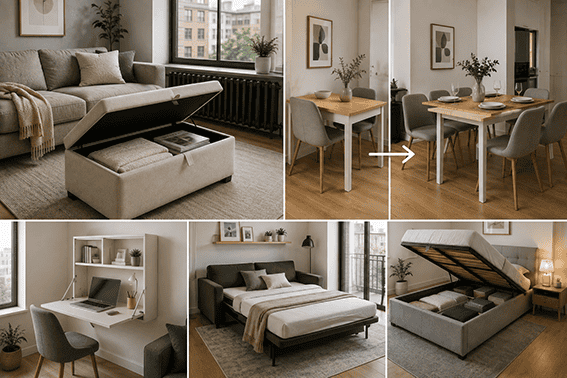
The same idea applies to dining areas. A huge dining table might feel luxurious, but in a small flat, it can totally take over the room. Instead, consider an extendable table that stays small for everyday meals and expands when you have guests. Pair it with stylish, comfy chairs, and you’ve got a welcoming dining nook without eating into your living space. You can find beautiful and practical options from retailers like Shawcross Furniture that are made for modern living. Smart design ideas for small spaces use this kind of clever thinking, from wall-mounted desks that fold away to sofa beds that are actually comfortable.
Playing with Scale and Proportion
When furnishing a unique or small space, getting the size right matters. It’s a common myth that you should only use tiny furniture in a tiny room. Sometimes, a bunch of small pieces can make a space feel cluttered and even smaller. On the flip side, one or two well-chosen, larger items can create a sense of calm and make the room feel more intentional. The trick is to find that sweet spot.
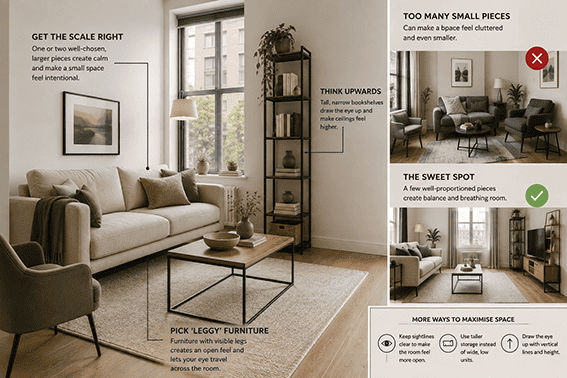
One great tip is to pick ‘leggy’ furniture. Sofas, sideboards, and armchairs on slender legs create an open feel because you can see the floor underneath them. This visual trick makes the room seem bigger and airier. Also, think upwards. Tall, narrow bookshelves draw your eye up, making ceilings feel higher. Instead of a wide, low TV stand, maybe a taller unit could offer the same storage in a smaller footprint. Mastering these techniques will help you make the most of space with smart design and ensure even the smallest room feels spacious and balanced.
Let There Be Light: Using Furniture to Enhance Brightness
Natural light is a precious thing in many city homes, so it’s crucial to make the most of it. Your furniture choices can really change how bright and airy a room feels. Dark, heavy pieces can soak up light and make a room feel gloomy, while lighter choices can help bounce light around.
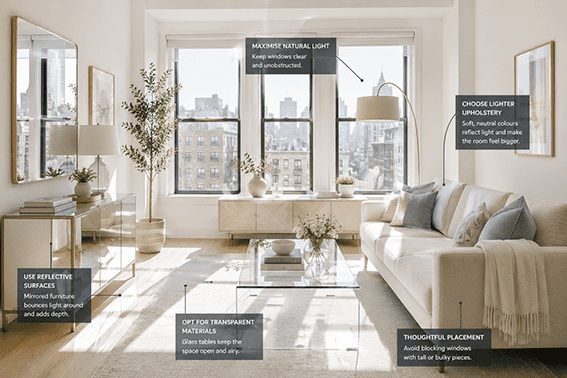
Think carefully about materials and finishes. A glass coffee table, for instance, barely takes up any visual space and lets light pass right through it. Mirrored furniture can do something similar, reflecting both light and the view to create an illusion of depth. For upholstery and wood, choose lighter colours. Creams, soft greys, pale woods, and pastel shades will all help make a room feel brighter. Pay attention to where you put things, too. Try not to place bulky furniture like a tall bookcase or a high-backed armchair where it will block a window and cast a big shadow over the room.
Defining Zones in Open-Plan Living
Open-plan living is popular in modern flats and conversions, but a single large room can feel lost and purposeless if you don’t clearly define areas. Furniture is your best tool for carving out distinct zones for different activities, like relaxing, eating, and working. You don’t need walls to create separation; smart furniture placement can do the job.
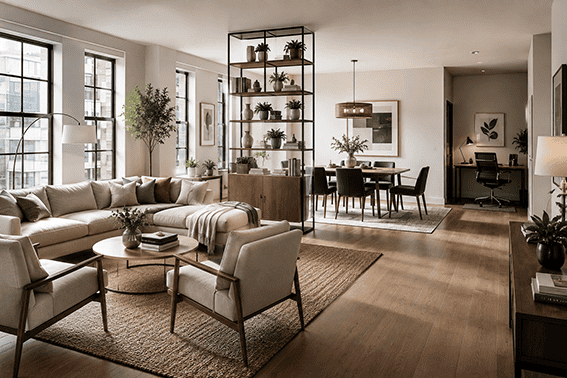
A large rug is one of the easiest ways to ground a living area. Place your sofa and armchairs on the rug to create a contained, cosy conversation zone. The back of a sofa can also act as a subtle divider between the living and dining areas. An open-backed shelving unit is another brilliant option. It can separate two zones while still letting light and conversation flow through, plus it offers valuable storage and display space. If you need ideas, browsing through different living room ideas and designs can show you how designers use furniture to cleverly structure open-plan layouts.
Expressing Your Personality Through Your Choices
While practicality and saving space are important, your home should ultimately feel like *you*. Don’t let the challenges of a city space stop you from showing off your personality. Once you’ve sorted out the practical stuff, it’s time for the fun part: choosing pieces you truly love. This is what turns a functional space into a real home.
A ‘hero’ piece, like a beautifully upholstered armchair in a bold colour or a unique dining table, can become the star of a room. It gives your eye somewhere to land and sets the mood for the whole space. Don’t be afraid to mix styles. A modern sofa can look fantastic next to a vintage sideboard. You can also add personality through smaller items like distinctive bar stools at a breakfast bar or interesting wall panels that add texture and art to a plain wall. These details make a home feel curated and personal, telling a story about who lives there.
Your home, no matter its size or shape, is your sanctuary. Thoughtful, smart furniture choices help you create a look that’s practical for city living and a true expression of your unique style.

