
Wrist Pain When Lifting? How to Fix Your Pressing Technique

Share
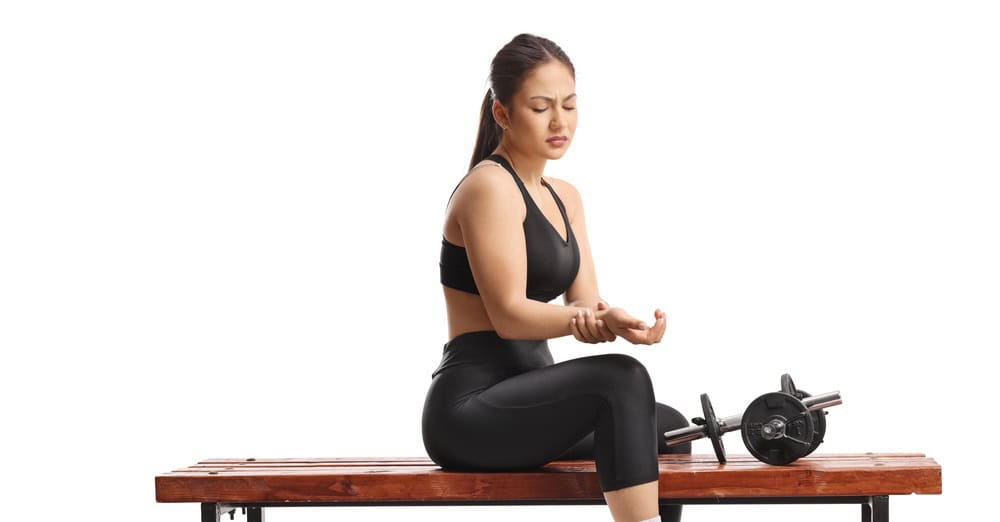
How to Reduce Wrist Pain When Lifting Weights
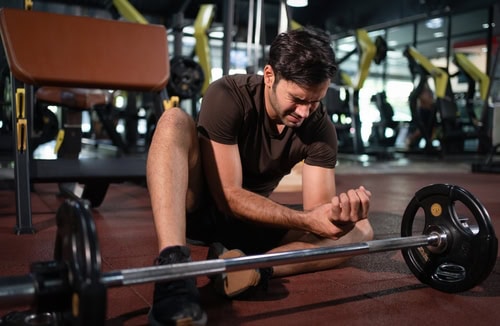
Wrist discomfort during pressing exercises can turn otherwise productive workouts into frustrating sessions, limiting how much weight you can lift and making every repetition feel uncertain. Poor grip positioning, excessive wrist extension, and unstable bar paths can place unnecessary stress on your joints, increasing the risk of persistent pain. Learn how better pressing technique, targeted mobility drills, and supportive equipment can help you build strength while keeping your wrists stable and comfortable.
How Load Shifts Across the Palm
During a press, the load should sit over the heel of the hand and remain broadly aligned with the forearm. If it drifts towards the fingers, the wrist tends to extend backwards. That creates a longer lever between the load and the joint, increasing the effort required from the wrist and forearm muscles.
Grip width also changes pressure distribution. A very wide grip can push the wrist sideways, while an excessively narrow position may encourage the elbows and hands to lose alignment. Check that your knuckles point upwards and that the bar rests low enough in the palm to stay stacked over the forearm.
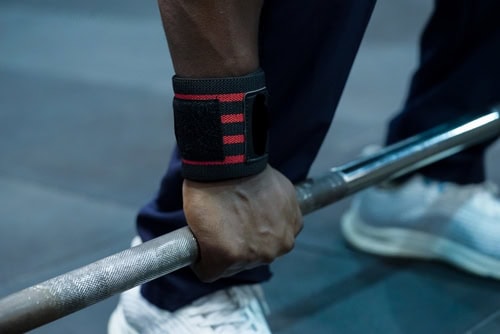
Some lifters use gym wrist wraps when heavier sets expose a vulnerable wrist angle. Wraps can limit excessive extension and provide a useful physical cue, though they should fit firmly without causing numbness or colour changes in the hand. They support a sound position but cannot correct a poorly placed grip.
Film one warm-up set from the side. The recording should show the wrist sitting over the elbow, with no sudden bend as the repetition begins.
Common Errors in Barbell Path
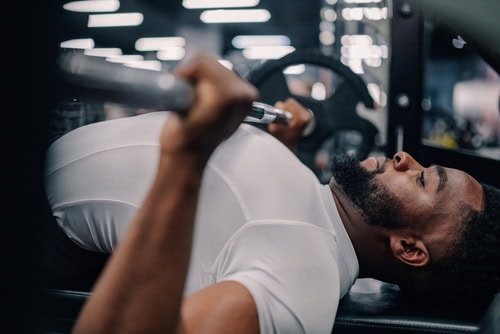
A stable wrist can still become uncomfortable when the bar follows an inefficient route. In a bench press, lowering too close to the neck often forces the elbows out and places the wrists behind the load. Bringing the bar towards the lower chest usually creates a more manageable relationship between the hand, elbow and shoulder, although exact positioning varies with body proportions.
The return path should remain controlled. If the bar rolls towards the fingers or shifts inside the palm, reset your grip before continuing. Detailed guidance on bench press wrist pain also highlights grip position and excessive wrist extension as common contributors.
Overhead pressing presents a related problem. Starting with the elbows too far behind the wrists leaves the forearms angled away from the direction of force. From the front, the forearms should look close to vertical through the main part of the lift.
Reduce the load if alignment changes during the final repetitions. A set of six technically consistent presses gives you more useful training than eight repetitions completed through increasing wrist collapse.
Equipment That Stabilises Vulnerable Angles
Support equipment works best when it addresses a specific issue. Wrist wraps may help during top working sets, particularly when the joint remains comfortable with lighter loads but becomes unstable near heavier efforts. Place the wrap across the wrist joint instead of covering only the forearm. It should restrict unwanted movement without locking the hand into an awkward angle.
A rack set at the correct height also protects the wrist. If you must reach upwards or shrug heavily to unrack a bar, your grip can shift before the first repetition. Set the hooks so that a small elbow extension clears them while your shoulders stay firmly positioned.
Dumbbells offer another useful option when a fixed hand position feels uncomfortable. A neutral grip, with the palms facing each other, can reduce the wrist extension required in some pressing movements. Handles should still sit securely across the palm.
Equipment shouldn’t be used to train through sharp pain. Guidance on wrist pain from lifting recommends considering load management, technique and gradual rehabilitation. Persistent pain, weakness or reduced movement calls for assessment by a qualified healthcare professional.
Targeted Drills for Forearm Mobility
Prepare the wrists with controlled movement before loading them. Start with ten slow wrist circles in each direction, then open and close the hands for 20 repetitions. These simple drills raise local temperature and reveal stiffness before you reach the working sets.
Next, place your palms together in front of your chest with the fingers pointing upwards. Lower the hands slowly while keeping the palms in contact, stopping at a mild stretch. Hold for 15 to 20 seconds and repeat twice. Avoid forcing the joint into pain.
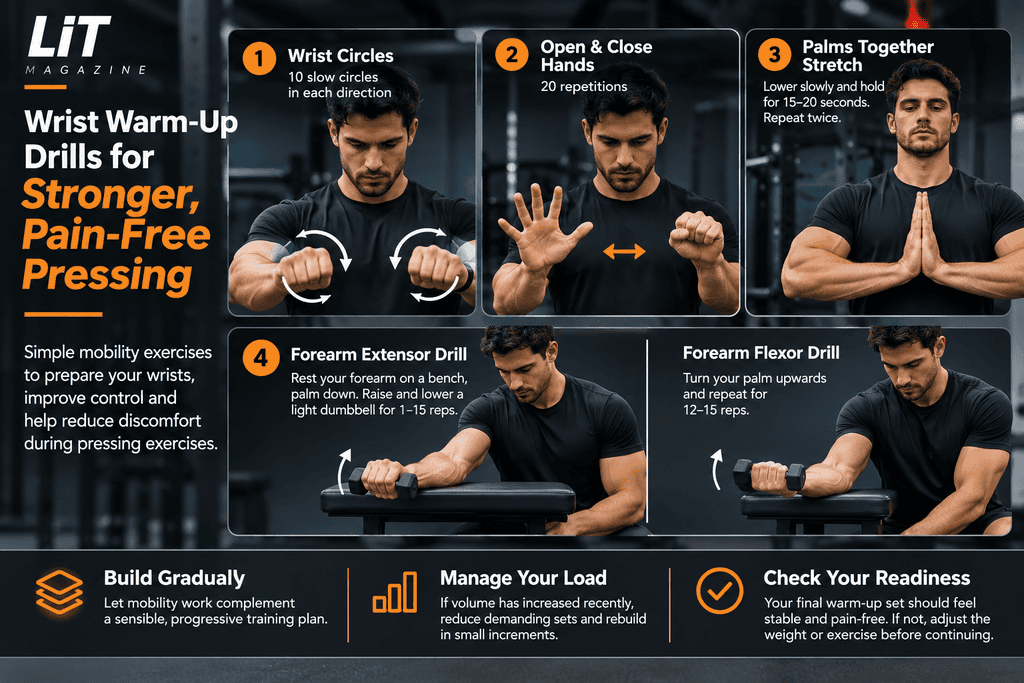
A light forearm extensor drill can improve control. Rest your forearm on a bench with the hand over the edge, palm facing down, then raise and lower a very light dumbbell for 12 to 15 repetitions. Turn the palm upwards and repeat for the wrist flexors. Use a load that allows smooth movement without gripping excessively.
Mobility work should complement progressive loading. If pressing volume has recently doubled, exercises alone may not settle an irritated wrist. Reduce the demanding sets for several sessions, keep pain-free movement in your programme and rebuild load in small increments. This gradual approach is consistent with expert advice on preventing exercise-related aches, strains and injuries.
Your final warm-up set provides the clearest test. If the wrist stays stacked, the grip remains secure, and the movement causes no sharp discomfort, the working load is more likely to be appropriate. When those signs disappear, adjust the weight or exercise before starting the next set.

