
Best Music for the Gym: Why These Pop Songs Keep Us Working Out for Longer

Share

New analysis from Chordify reveals that the pop songs most commonly associated with longer, more consistent workouts share three key traits: optimal tempo (BPM), emotional uplift, and rhythmic consistency.
Rather than focusing on novelty or current charts, Chordify analysed some of the biggest pop songs of all time to understand why certain tracks continue to dominate gym floors, running playlists and fitness classes years — sometimes decades — after release.
The findings show that the songs people work out to for the longest aren’t necessarily the fastest or loudest. Instead, they sit in BPM ranges that support sustained movement, combined with upbeat emotional tone and minimal disruption to rhythm.
What Makes a Song Keep You Moving Longer
Chordify’s analysis focused on three core performance drivers:
BPM That Supports Endurance
Songs between 120–170 BPM are most effective for maintaining movement without premature fatigue. Slower tempos can reduce pace, while excessively fast tracks often lead to burnout.
Emotional Positivity (“Happiness” Rating)
Upbeat melodies, major keys and familiar hooks reduce perceived effort. When a song feels good, people are less likely to stop early — even when intensity remains high.
Rhythmic Consistency
Tracks with steady beats and limited breakdowns allow the body to lock into a natural cadence. Frequent tempo changes or long instrumental drops interrupt movement and shorten workouts.
The Pop Songs That Best Support Longer Workouts
Based on these criteria, Chordify identified ten globally recognised pop songs that consistently support longer workout duration, across cardio, running and gym training.
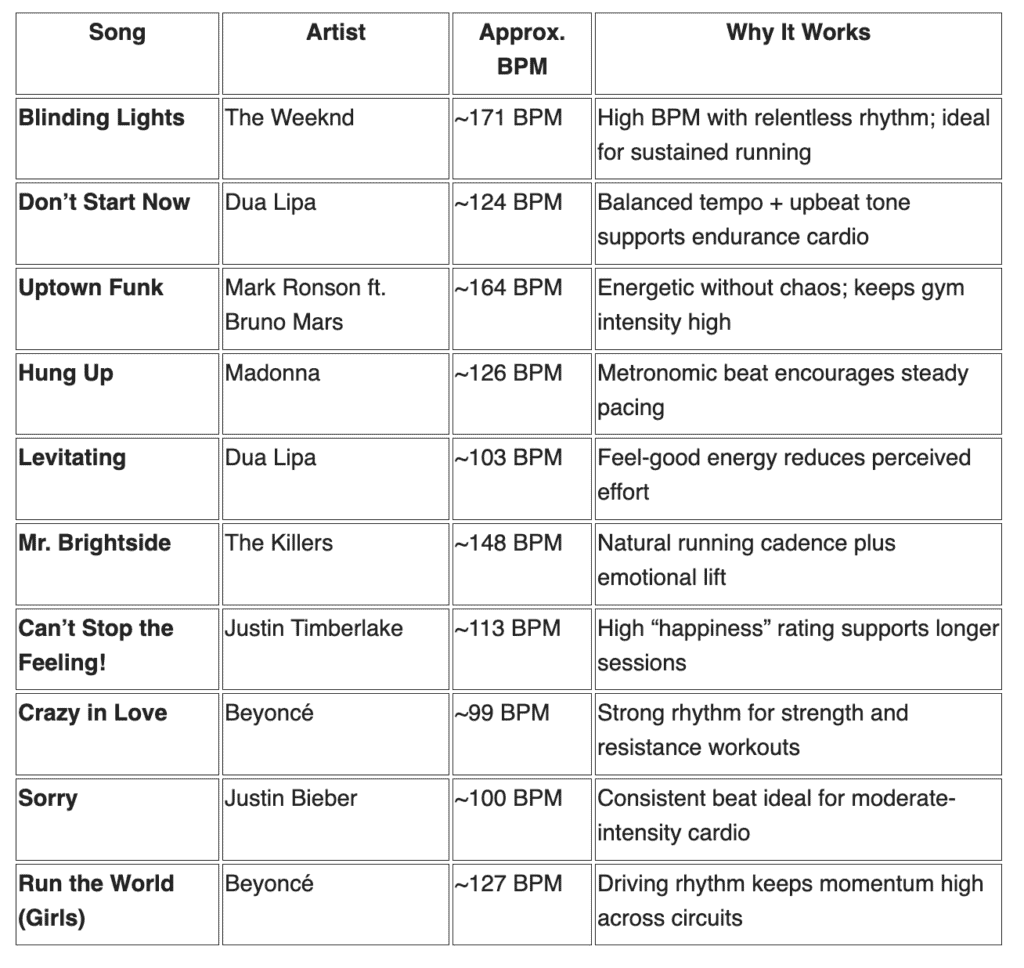
Driving rhythm keeps momentum high across circuits
Why “Happier” Songs Extend Workout Time
Songs with a positive emotional tone — often described as “happy” or uplifting — reduce how hard exercise feels, even when physical output stays the same. This effect is well-documented in sports psychology and explains why upbeat pop consistently outperforms darker or more aggressive genres for longer sessions.
In practice, this means:
- People run for longer before stopping
- Rest periods shorten during gym sessions
- Perceived fatigue arrives later
In short, happy songs don’t make workouts easier — they make effort feel lighter.
Why These Songs Still Dominate Gym Playlists
Despite new music being released daily, these tracks remain staples because they are structurally reliable. They don’t distract, surprise or emotionally drain the listener — they support repetition, rhythm and flow.
That combination is what keeps people moving when motivation drops.
“Workout music isn’t about hype,” Chordify explains. “It’s about rhythm you can trust. When the body knows what’s coming next, it keeps going.”

