
Blinds or Curtains? How to Choose the Best Window Dressing

Share
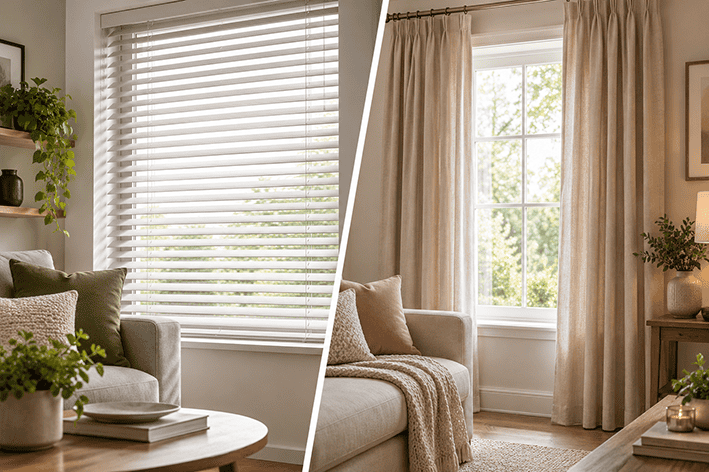
Blinds vs Curtains: Choosing the Right Window Dressing for Every Room
Window dressings have a major effect on how a room looks and feels. They influence privacy, natural light, warmth and the overall style of your home. While curtains remain a popular choice, blinds offer a practical, versatile solution for many modern households.
The right option depends on the room, the size and shape of the window, how much light you want to control and the look you are trying to create. For many homes, blinds provide the most flexible combination of style and everyday practicality.
Why Blinds Are a Popular Choice
Blinds are available in a wide range of styles, fabrics, colours and operating systems. They can suit compact windows, large glazed areas, conservatories, bathrooms and bedrooms, making them an adaptable choice throughout the home.

Unlike curtains, blinds fit neatly within or close to the window frame. This can make a room feel more open and uncluttered, particularly where space is limited.
Greater Control Over Light and Privacy
One of the biggest advantages of blinds is the level of control they offer. Venetian blinds, vertical blinds and day-and-night blinds can be adjusted to let in natural light while maintaining privacy.
This is particularly useful in living rooms, street-facing bedrooms and home offices. You can soften direct sunlight, reduce glare on screens and prevent people from seeing directly into the room without having to block out all daylight.
A Practical Option for Kitchens and Bathrooms
Curtains are not always ideal in humid or high-use areas. In kitchens, they can absorb cooking odours and may be positioned too close to sinks or hobs. In bathrooms, moisture can affect some fabrics over time.
Roller blinds, Venetian blinds and moisture-resistant options are often easier to keep clean and better suited to these practical spaces. Their simple design makes them a smart choice where function matters as much as appearance.
When Curtains May Be the Better Option
Curtains can bring softness, colour and texture to a room. They are often a good choice for formal living spaces, traditional interiors or bedrooms where a layered look is preferred.

Heavier, lined curtains can also create a cosy feel and may help reduce draughts around older windows. They work particularly well when you want the window dressing to become a decorative focal point.
However, curtains require more fabric, take up more visual space and can be less flexible when you need precise control of daylight. For this reason, many homeowners choose blinds for the main window covering and add curtains only where they want extra warmth or a more decorative finish.
Choosing the Right Blind Style
Different rooms have different needs. Choosing the right type of blind can make the window dressing feel more natural and useful.
Roller Blinds
Roller blinds are simple, neat and highly versatile. They work well in kitchens, bathrooms, bedrooms and home offices. Blackout roller blinds can be particularly useful in bedrooms, while lighter fabrics can soften sunlight in living areas.
Venetian Blinds
Venetian blinds allow you to tilt the slats and control the amount of light entering the room. They are suitable for rooms where privacy is important but you still want daylight, such as bathrooms, offices and street-facing windows.
Roman Blinds
Roman blinds combine the streamlined fit of a blind with the softer appearance of fabric. They can suit bedrooms, dining rooms and living spaces where you want a more decorative finish without the bulk of full curtains.
Day-and-Night Blinds
Day-and-night blinds use alternating sheer and opaque fabric panels to provide flexible light control. They are a popular choice for modern interiors and can help create privacy without making a room feel dark.
Consider the Shape and Position of Your Windows
Blinds can be especially useful for windows where curtains are difficult to fit. Conservatory roofs, roof lanterns, apex windows and doors may need a tailored solution to control glare and maintain comfort.

Made-to-measure blinds are often a better investment than off-the-shelf options because they are designed to fit the exact dimensions of the window. A close fit can improve appearance, light control and everyday operation.
The Blind Company supplies made-to-measure blinds, shutters and awnings, with options including roller, Venetian, vertical, Roman, pleated, day-and-night, conservatory and roof blinds. Its range makes it easier to choose a style that suits both the room and the practical requirements of the window. The Blind Company
Colour and Style Considerations
Choose a blind colour that works with the rest of the room without feeling too restrictive. Neutral tones can create a calm, timeless look, while a bold fabric or patterned Roman blind can add personality.
For a smaller room, a blind in a similar colour to the wall can help create a more open feel. In brighter rooms, consider fabrics that filter strong sunlight while maintaining a pleasant level of natural light.
Frequently Asked Questions
Are blinds better than curtains?
Neither option is always better, but blinds often offer greater control over light and privacy while taking up less space. They are also particularly practical for kitchens, bathrooms and modern interiors.
Which blinds are best for bedrooms?
Blackout roller blinds are a popular choice for bedrooms because they can help reduce outside light. Roman blinds and day-and-night blinds can also work well depending on the desired style and level of light control.
Are blinds suitable for bathrooms?
Yes. Moisture-resistant roller or Venetian blinds are often well suited to bathrooms because they are practical, easy to clean and less likely to absorb moisture than fabric curtains.
Can blinds and curtains be used together?
Yes. Layering blinds with curtains can provide flexible light control while adding softness and decorative style to a room.
Conclusion
Curtains can add warmth and texture, but blinds are often the more adaptable choice for everyday living. With excellent control over privacy and natural light, a neat made-to-measure fit and styles suited to almost every room, blinds can offer both practical benefits and a polished finish. By choosing the right blind type for each space, you can create a home that feels comfortable, private and beautifully considered.

