Shopping Local Online: How the Meaning of Local Is Changing

Share
What Does Shopping Local Mean in the Digital Age?
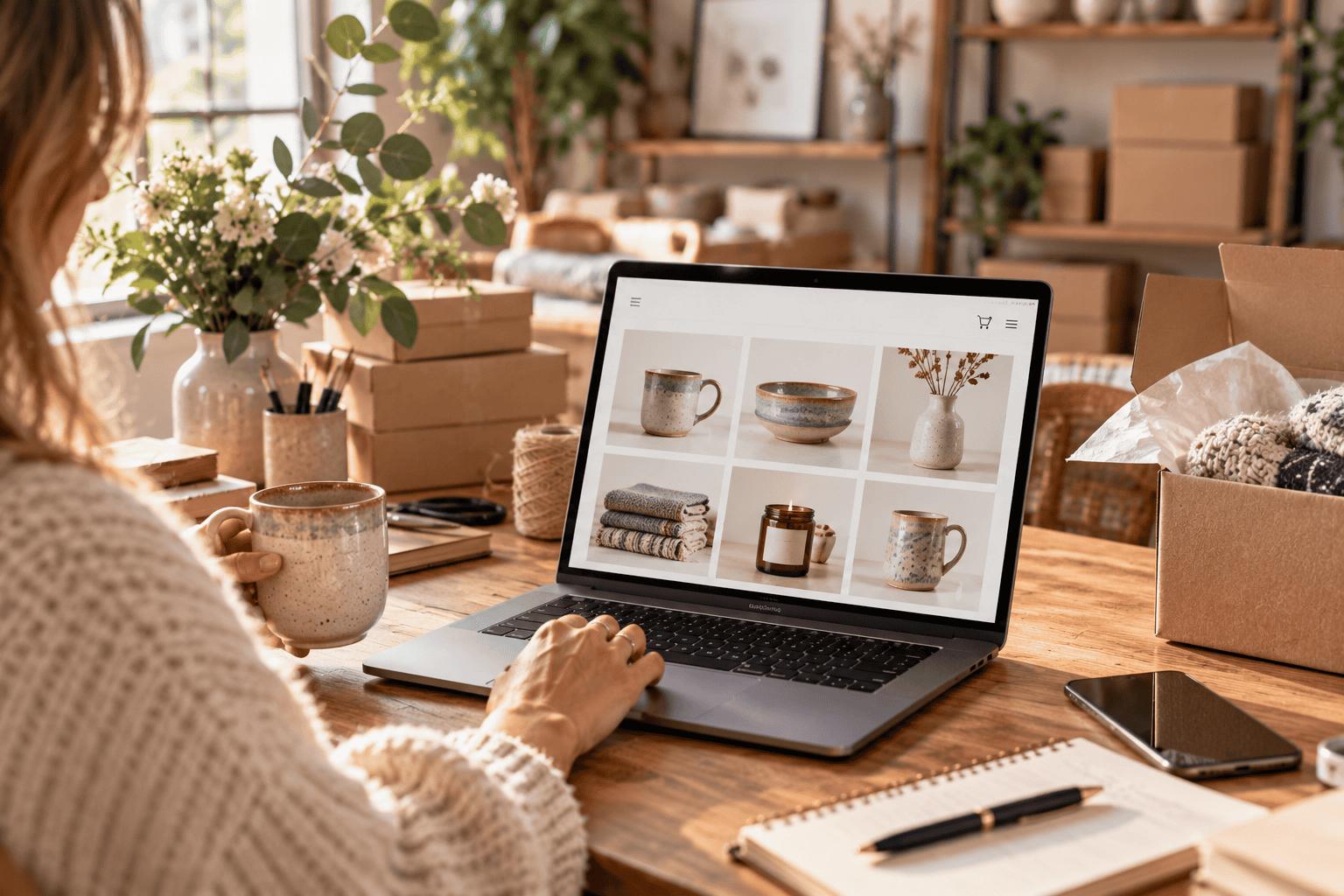
The idea of shopping locally used to paint a very specific picture: a stroll down the high street, the chime of a shop bell, and a friendly chat with a familiar owner. It was all about convenience and community ties in your immediate area. But today, the internet has stretched what we consider our “neighbourhoods,” changing what it means to support a “local” business. Our desire for connection and authenticity hasn’t disappeared; it has simply found new digital ways to thrive.
We can now shop ‘locally’ from a maker hundreds of miles away, choosing to support a small, independent business in another part of the country over a corporate giant with a warehouse on our doorstep. This new localism is a conscious choice to connect with the creator, even when that connection happens through a screen and a courier service.
Beyond the High Street: Redefining “Local”
The modern definition of “local” has expanded far beyond physical proximity, especially when we think about the meaning of “shop local.” For more and more consumers, it’s about supporting a business that shares their values. This might be a family-run company, a solo artisan making goods by hand, or a brand committed to sustainable practices. The “local” feeling comes from the business’s size and values, not its physical address. When you buy a hand-thrown mug from a potter in Penzance while sitting in your flat in Edinburgh, you’re taking part in this new localism. You’re directly supporting an individual’s craft and livelihood.

This change in how people shop shows what local means in a connected age: it’s a vote for a certain kind of economy. It’s choosing unique items over mass production and stories over anonymity. The joy isn’t just in the item itself, but in knowing where it came from. Social media and online marketplaces have been key to this, letting us “meet” the makers, see their workshops, and understand their creative process. This digital closeness creates a bond that feels just as real as a face-to-face interaction, building a sense of community that goes beyond geographical limits.
The Logistics of “Local” at a Distance
For this new way of local shopping to work, the experience needs to be as smooth and reliable as buying from a big retailer. A customer in London who orders from a small Scottish textile artist still expects their parcel to arrive quickly and safely. That can be difficult for a small business without the space, staff, or expertise to manage warehousing and shipping at scale. The romantic image of an artist packing a box in their studio is lovely, but handling hundreds of orders, keeping track of stock, and coordinating deliveries can quickly become overwhelming.
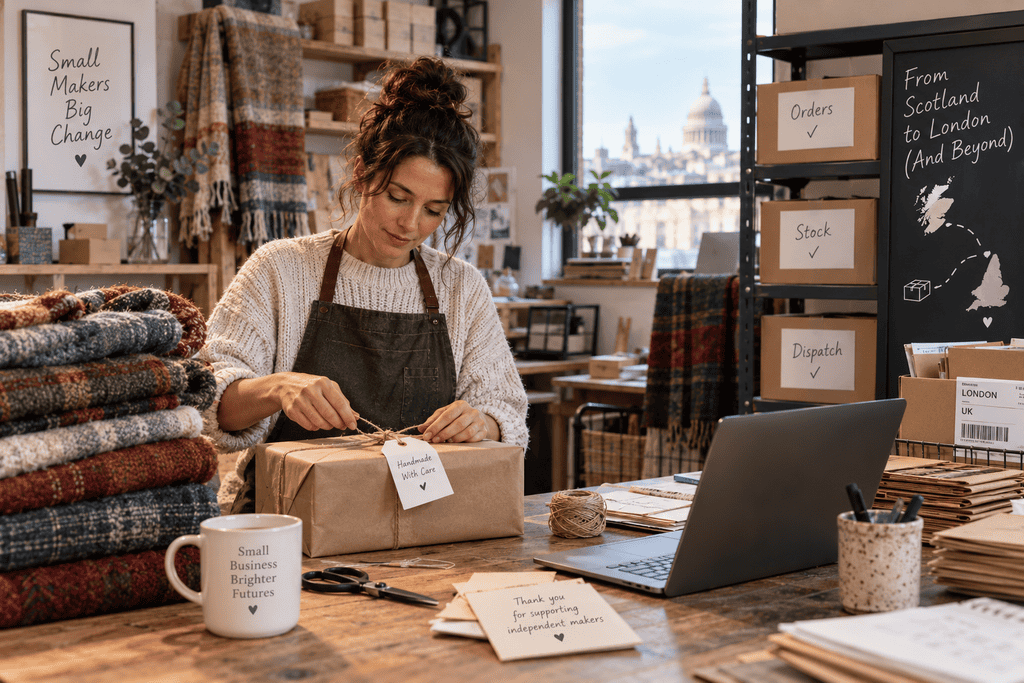
The challenge becomes greater when a business starts reaching customers beyond its immediate area. A brand that begins by serving people nearby may eventually be sending products across the UK or into other countries, which can make storage and delivery much harder to manage from a small studio. This is where behind-the-scenes e-commerce infrastructure starts to matter. For example, an independent brand serving customers across several markets might keep stock closer to where demand is concentrated, using a European fulfillment center as part of its wider distribution setup.
From there, orders can be picked, packed, and dispatched without the business owner having to manage every parcel themselves. The point isn’t to make a small brand operate like a huge retailer. It’s to give it enough logistical support to maintain a reliable customer experience as its reach grows. That makes it easier for an artist or independent maker to build a following beyond their local area without allowing the practical demands of growth to overwhelm the creative work that made the business appealing in the first place.
How Technology Bridges the Gap
The boom of digitally native “local” businesses wouldn’t be possible without the accessible technology that powers them. E-commerce platforms have opened up retail to everyone, giving anyone with a great product the chance to open a virtual shopfront to the world. A decade or two ago, starting a business meant securing a physical space, a significant financial hurdle that excluded many. Today, platforms like Shopify and Etsy provide the tools to build a beautiful, functional online store in just a few hours.
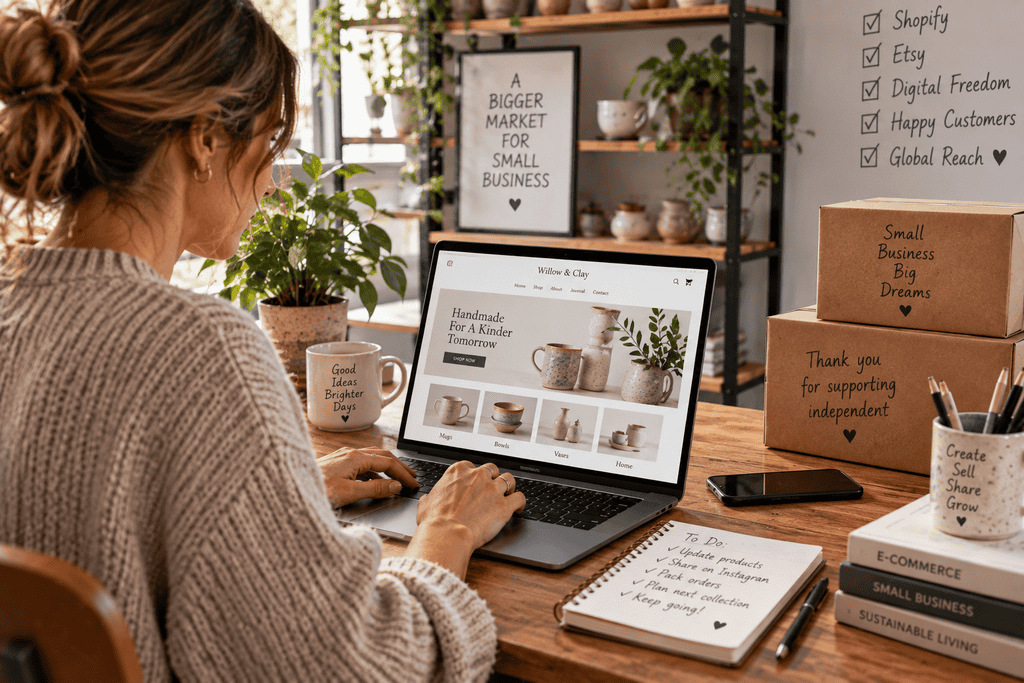
These platforms offer integrated tools for marketing, inventory management, and customer communication, creating a central hub for running a business from a laptop. Plus, social media has become a powerful sales channel. Instagram and Facebook aren’t just for sharing photos anymore. They’re lively marketplaces, too, where customers can discover new brands, talk directly with creators, and buy products without ever leaving the app. These technologies have effectively removed the gatekeepers of traditional retail. They provide a direct line from the creator to the consumer, fostering the sense of connection that defines the new localism.
The Customer’s Role in the New Localism
This shift towards a broader definition of local reflects changing consumer priorities. In this algorithm-driven era, many people are tired of identical products and faceless corporations. Instead, they’re actively seeking more meaningful purchases and crave authenticity and quality craftsmanship. This conscious consumerism is what drives the new local economy.
Understanding what shopping locally today involves recognizing this search for connection. When you choose to buy from an independent online store, you often get more than just an object. You might receive a handwritten thank you note, see your order being packed on an Instagram story, or even exchange messages with the owner about a custom request. This level of personal interaction simply isn’t possible with a multinational giant. It turns a simple transaction into a relationship, building loyalty and a sense of shared community. Customers feel like patrons of the arts or supporters of a small enterprise, not just another order number in a database. This emotional return on investment is a powerful motivator and a key reason why these businesses can thrive alongside their larger competitors.
The Future of Hyper-Local and Hyper-Personal
As the concept of local keeps evolving, we’re seeing two interesting trends emerge: the rise of hyper-local e-commerce and an even deeper focus on personalisation. Hyper-local refers to online businesses that use digital tools to serve their immediate geographical area with incredible efficiency. This might look like a local bakery taking online orders for same-day delivery within a five-mile radius, or a neighbourhood bookshop offering a “click and collect” service. This model combines the convenience of online shopping with the immediacy of having a shop just around the corner, offering the best of both worlds.
At the same time, the trend towards hyper-personalisation is growing. As technology gets smarter, small brands will be able to offer even more tailored experiences. Imagine an online jeweller using a virtual tool to help you design a bespoke piece in real-time, or a skincare brand creating a custom formula based on an online questionnaire. This deep level of customisation and direct collaboration between creator and customer is the ultimate expression of the “new local.” It moves beyond a simple purchase to become a creative partnership.
The lines between local and global have been permanently blurred. In this new landscape, “local” is less about where a business is and more about what it represents. It’s a commitment to craftsmanship, community, and connection in an increasingly digital world.