AI in Manufacturing: How Artificial Intelligence Is Changing the Industry

Share
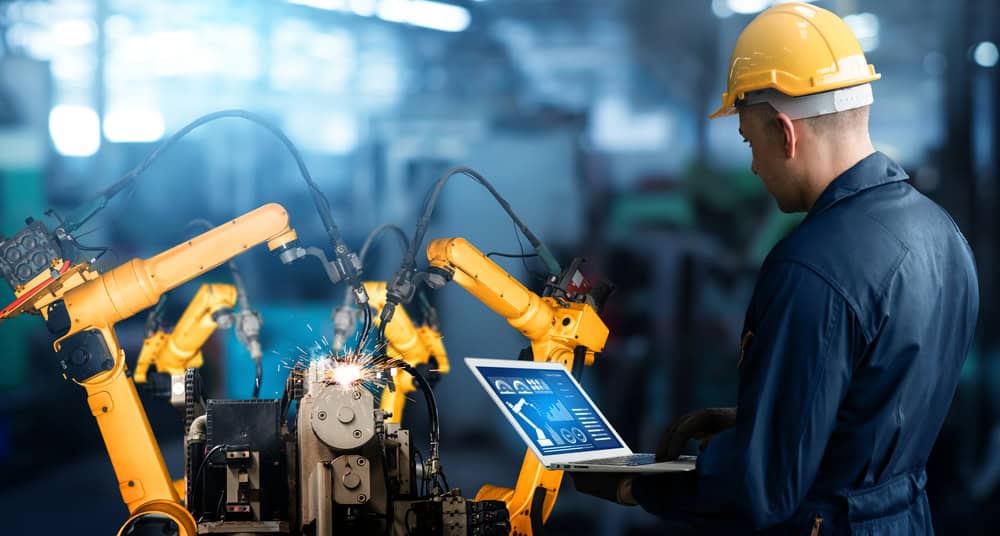
How AI Is Transforming Modern Manufacturing
Artificial intelligence is becoming an increasingly practical tool for manufacturers. Rather than replacing the people who build, inspect and maintain products, AI can help them make faster decisions, identify potential issues earlier and improve consistency across production.
From predictive maintenance to automated quality checks, AI is helping manufacturers make better use of the data already generated by their machines, tools and processes. Its value lies in applying it to real operational challenges, not simply adopting technology because it is new.
Improving Quality Control
Quality control is one of the most important applications of AI in manufacturing. Production environments generate large amounts of information, including measurements, inspection results, tool data and machine performance records. AI can analyse these patterns more quickly than manual reviews alone.
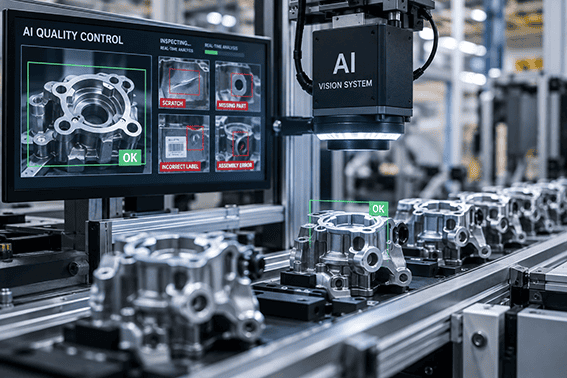
Detecting Defects Earlier
Computer vision systems can inspect components, packaging and finished products for visible defects. These systems can be trained to identify issues such as scratches, incorrect labels, missing parts or inconsistent assembly.
When potential defects are identified earlier, manufacturers can investigate the cause before more products are affected. This can reduce waste, rework and disruption further along the production line.
Supporting Accurate Assembly
In sectors where precision is essential, such as automotive, aerospace and engineering, manufacturers need confidence that each fastening and assembly step has been completed correctly. Connected tools and torque-management systems can provide traceable data that supports quality assurance.
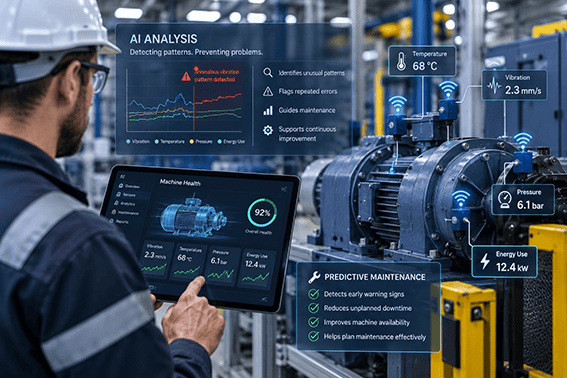
AI can help analyse this information to identify unusual patterns, flag repeated errors and guide continuous improvement. However, reliable data capture remains essential. AI results are only as dependable as the data used to produce them.
Reducing Unplanned Downtime
Unexpected equipment failure can be costly. It may stop production, delay orders and create pressure for maintenance teams. AI-powered predictive maintenance helps manufacturers move from reacting to a problem towards identifying warning signs before failure occurs.
Using Data to Predict Maintenance Needs
Sensors and connected equipment can collect information about vibration, temperature, speed, pressure and energy use. AI can analyse this data to recognise patterns associated with wear or potential failure.
Maintenance teams can then inspect or service equipment at a more appropriate time, rather than waiting for a breakdown. This approach can improve machine availability while helping businesses plan maintenance work more effectively.
Making Production More Efficient
AI can support better planning across the factory. It can help identify bottlenecks, estimate demand, improve scheduling and analyse how materials move through a process.
For example, production managers may use AI-supported insights to understand where waiting times occur or which stages of a process cause the most delays. With clearer information, they can make targeted changes instead of relying only on assumptions.
AI can also assist with inventory planning by helping organisations forecast material needs. More accurate planning can support smoother production and reduce the risk of running short of important components.
Helping Employees Work More Effectively
AI does not remove the need for skilled workers. Instead, it can help employees focus their attention where it is most valuable.
Operators may receive guidance when a process falls outside an expected range. Engineers can use data to investigate recurring quality issues. Managers can access clearer reports to support decisions about capacity, maintenance and performance.
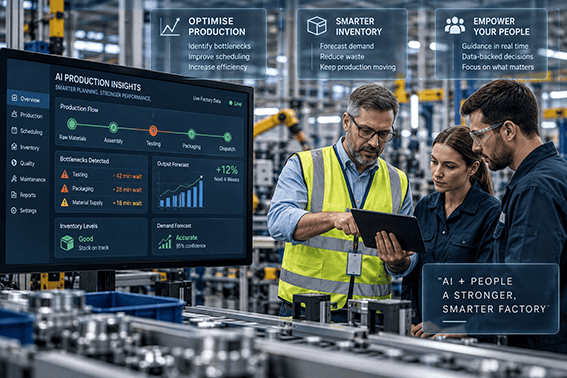
Successful adoption requires training and communication. Employees need to understand what the technology is doing, how its recommendations should be used and when human judgement is required.
The Importance of Connected Measurement Data
AI works best when manufacturers have accurate, well-managed data. In assembly operations, torque measurements, audit records and tool-performance information can provide important evidence that processes are being completed consistently.
Crane Electronics supplies torque-management solutions for manufacturers, including precision torque tools, transducers, data collectors, lineside controllers, testing equipment and software. These tools can support accurate measurement, traceability and quality control across assembly environments.
When connected data is reliable, manufacturers are better positioned to use analytical tools and AI responsibly. The aim is not to add complexity, but to give teams clearer insight into the performance of their processes.
Challenges to Consider
AI implementation should be planned carefully. Manufacturers need to consider data security, system integration, employee training and the quality of the information being collected.
It is often best to begin with a focused use case, such as monitoring a particular production line or improving the inspection of a specific component. A smaller project can demonstrate value, identify practical challenges and help the business decide how to expand AI use over time.
Frequently Asked Questions
How is AI used in manufacturing?
AI can support quality control, predictive maintenance, production planning, inventory management, automation and data analysis.
Can AI improve product quality?
Yes. AI can help identify defects, analyse process data and highlight patterns that may lead to quality issues. Human oversight and accurate measurement remain important.
Will AI replace manufacturing workers?
AI is more commonly used to support employees by automating repetitive analysis and highlighting issues that need attention. Skilled workers remain essential for judgement, maintenance and process improvement.
What should manufacturers do before adopting AI?
They should identify a clear business problem, assess available data, involve relevant employees and start with a practical project that can be evaluated carefully.
Conclusion
AI is changing manufacturing by helping businesses use data more effectively. It can improve quality, reduce downtime and support more efficient decisions across the production process. When introduced with clear goals, reliable measurement and strong employee involvement, AI can become a valuable tool for safer, more consistent and more productive manufacturing operations.