Don’t Underestimate The WOW Factor Your Eyes Behold – Look After Them

Share

WINDOWS TO THE SOUL: Taking A Look At Why Our Eyes Are So Important
Welcome to the launch issue of Rohto Dry Aid’s e-news series. This feature is the first in a series of e-news fromRohto Dry Aid – the scientifically backed eye drop treatment for the two main types of Dry Eye Disease – Aqueous-Deficient Dry Eye (ADDE) and Evaporative Dry Eye (EDE) – ww.mentholatum.co.uk/brands/rohto-dry-aid.
We explore the very latest news and research on all things relating to eye health and Dry Eye Disease. They are designed to help you understand this complex and overlooked eye health issue and keep you up to date on other eye health news.
Eyes – The WOW Factor
Sight, through our eyes, is responsible for 80%[1] of the information our brain receives. It is thought that an average eye will see 24 million different images in a lifetime.
Vision is the process of deriving meaning from what is seen. It is a complex set of functions, but research indicates that approximately 80-85% of our perception, learning, cognition, and activities are mediated through vision.[2] Indeed, about half of the human brain is dedicated to vision and seeing. The eye-brain magical partnership is able to process 36,000 pieces of information in a single hour and it is thought that the human eye can perceive around a million colours, although some people may be able to see even more. The ultimate purpose of the visual process is to arrive at an appropriate motor, and/or cognitive response.
However, eyes are not just about sight or vision. In a new real-world poll commissioned by Rohto Dry Aid[3] – the scientifically backed eye drop treatment for the two main types of Dry Eye Disease – Aqueous-Deficient Dry Eye (ADDE) and Evaporative Dry Eye (EDE) – 82% of respondents said they thought the eyes tell us a lot about a person and just slightly less (79%) think the eyes are the windows to the soul.
- Nearly nine in 10 said that they could tell someone’s emotional state just by looking at their eyes (88%);
- More than half said they know whether they can trust someone from their eyes (57%)
- Half feel they actually know someone just by looking at their eyes.
We have all known someone with ‘kind eyes’ or alternatively someone who’s eyes have made you feel uneasy. Research has shown that the autonomic nervous system goes on alert whenever it detects a threat and that induces pupil dilation. Likewise, psychologists consider pupil dilation to be an honest sign of sexual or social interest. When people are sad or worried, they furrow their brow, which makes the eyes look smaller. Yet when people are cheerful, we may call them “bright-eyed,” as their raised eyebrows that make their eyes look bigger, brighter and happier. We can tell a true smile from a bogus one by looking at the eyes. It’s easy to fake the mouth shape into a smile, but the eyes are the giveaway: When we’re truly happy, we not only smile but also crinkle the corners of our eyes in a “crow’s feet” pattern.
Get Connected
Good eye contact is an important display of honesty during an interaction or conversation. The eyes are a central part of nonverbal communication. They show a range of emotions that words won’t always speak.
Failure to look someone in the eye can spark feelings of mistrust, uncertainty and even dislike. Conversely, good eye contact can help build trust, build confidence, create rapport. Making eye contact can also help people focus on the conversation and read vital facial expressions, improving understanding.
Research has also found that during a video call, participants retained more of the information from the call when there was more eye contact involved. A direct gaze for 30% of the interaction was all that was needed to have a significant effect on how much was remembered from the call[4].
Managing eye contact is also a key part of listening. Listening with your eyes is an under-rated skill. You might not notice boredom or cynicism creeping into your eyes, but the other person will. If you’re looking to keep your trust, it’s important to show that they’re holding your attention and you are interested in what they are saying.
Windows To The Soul
80% of respondents in the new real-world research from Rohto Dry Aid said they think that the eyes are the windows to the soul.[5] As ‘windows to the soul, your eyes can give you away. There’s not much you can do to stop tension, nerves or excitement being apparent in your eyes.
The Look of Love
Even when it comes to finding love, apparently how you communicate with your eyes can make all the difference. Prolonged eye contact is a powerful stimulator of affection. It is thought to release phenylethylamine, a chemical responsible for feelings of attraction and also oxytocin, the love chemical most closely associated with longer term bonding and commitment. Two clinical studies, where two opposite sex strangers were asked to gaze into each other’s eyes for two minutes, found that this was sometimes enough to produce passionate feelings for each other.[6] So much so that one of the couples even got married a year later! A famous experiment by Harvard psychologist, Zick Rubin, found that couples who were deeply in love after several years looked at each other 75% of the time while talking versus the average 30-60% of the time[7].
Why We Need To Get Eye Health Savvy
In so many ways, our eyes are such essential organs. When our eyes are not functioning properly, everything is at risk such as – education or learning, work, digital screen use, childcare, driving, participation in sports, hobbies, communication and relationships. Nearly nine in 10 of participants in a study (88%) ranked sight as their most valuable sense.[8] If other senses such as hearing, taste or smell stop working, it’s the eyes that best protect us from danger. The fact is that our eyes and our sight are so intrinsically crucial for most of us that three quarters of us actively worry about eye health.[9]
One eye health condition we all need to be healthy savvy about is Dry Eye Disease. Dry Eye Disease, or keratoconjunctivitis sicca, is a common condition and prevalence is increasing. It happens when you don’t produce enough tears (Aqueous-Deficient Dry Eye or ADDE) or the consistency of the tear changes (Evaporative Dry Eye or EDE). This leads to inadequate lubrication of the tear film with inflammation and likely damage to the eye surface. It can cause problems for a person’s vision, and this can spread to other areas, affecting their mental health too.
101 On Dry Eye Disease
Dry Eye Disease is very common and has many causes from age to the environment, including wind, cold, indoor air pollution and central heating, diet, certain medications such as the pill, and some health conditions. Children too can suffer from Dry Eye Disease. Dry Eye Disease symptoms, which you experience in the eye include:

- Dryness
- Soreness
- Itchiness
- Irritation
- Burning
- Grittiness
- Stinging
- Tiredness.
Untreated, Dry Eye Disease can have pretty serious consequences, yet despite this few people are even aware of it. The real-world research commissioned by Rohto Dry Aid, found that 51% of people have never heard of Dry Eye Disease, despite half of those who responded in the poll enduring symptoms of this potentially sight-destroying condition.[10]
Dry Eye Disease And Tears – The Relationship
Our tears are essential for maintaining the health of the front surface of the eye and for providing clear vision. They provide lubrication too and reduce the risk of eye infection as they wash away foreign matter in the eye.
There are in fact two main types of Dry Eye Disease; Aqueous Deficient Dry Eye and Evaporative Dry Eye. Often Dry Eye sufferers experience a combination of both types.[11]
Aqueous Deficient Dry Eye occurs when the tear glands don’t produce enough tears. Evaporative Dry Eye, which accounts for 85% of Dry Eye cases,[12] is caused by a damaged tear film lipid layer, allowing tears to evaporate. Evaporative Dry Eye is mainly caused by Meibomian Gland Dysfunction (MGD).
Delving deeper into Dry Eye Disease, there are two sets of glands involved. These are the Meibomian glands and the lacrimal glands, which are responsible for the production of fluids that maintain the tear film.
Our tear film has multiple layers,[13]which together, help to prevent evaporation of the tear film, provide protection from infection, stopping germs, bacteria and particles from entering the eye and contain proteins including immunoglobulins, which protect against infection, and mucin proteins, which reduce friction when blinking.
Rohto Dry Aid: Breaking The Cycle Of Dry Eye Disease
To fight against Dry Eye Disease, Rohto Pharmaceutical, one of the world leaders in eyecare and eye care specialists since 1909, have created Rohto Dry Aid, a proven eye drop treatment for Dry Eye Disease with a focus on the two main types of Dry Eye – Aqueous-Deficient Dry Eye (ADDE) and Evaporative Dry Eye (EDE).
Rohto Dry Aid provides fast soothing relief for up to 12 hours and it provides relief for eight symptoms of Dry Eye including dryness, soreness, itchiness, irritation, burning, grittiness, stinging and tiredness.
A UK user trial involving 107 adults suffering from Dry Eye Disease symptoms found that 97% of the volunteers reported symptom relief in just two minutes or less when using Rohto Dry Aid.
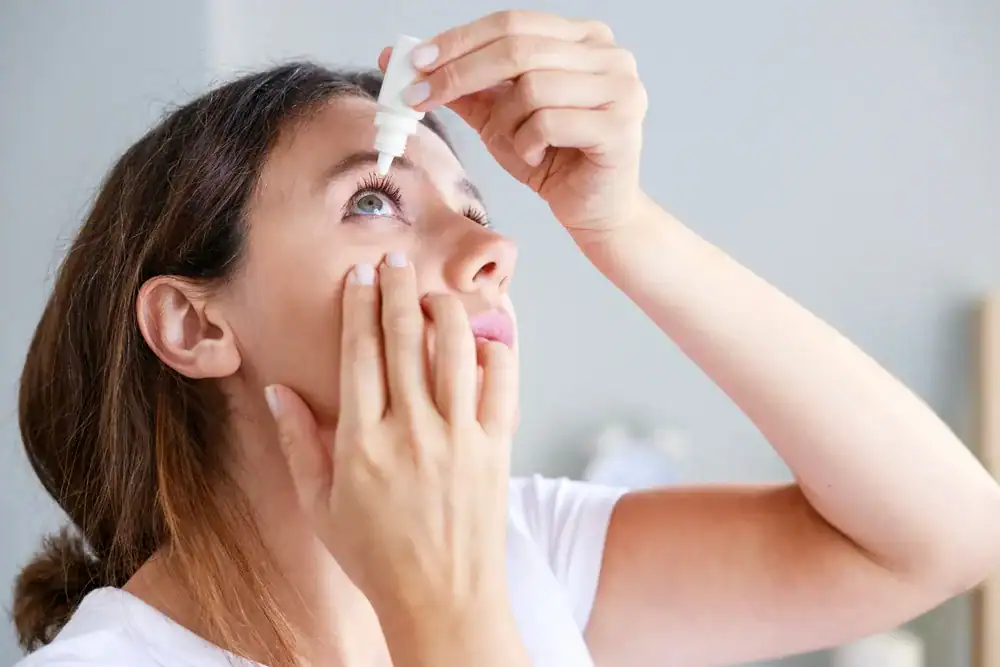
Breaking the cycle of Dry Eye Disease with a technology advanced product filled with science-backed ingredients that work to hydrate and restore the natural tear film layers is essential.
And because Rohto Dry Aid caters to the two main types of Dry Eye Disease, it’s actually suitable for those who are perhaps unaware which type of Dry Eye they actually suffer from.
Evaporative Dry Eye requires lipid-based products to help restore the lipid layer. If the lipid layer isn’t restored, the tears will continue to evaporate and the uncomfortable cycle of Dry Eye Disease will continue.
Smart Tearshield Technology
Rohto Dry Aid contains a unique Tearshield Technology. This restores the lipid layer – sealing in (lipid shield) and restoring the muco-aqueous layer, in turn restoring the natural tear’s health. Eye products can often be daunting to use. After all, they’re dealing with a very sensitive and delicate part of the body. Rohto Dry Aid is a scientific research collaboration with two panel members of TFOS DEWS II (Tear Film and Ocular Surface Society International Dry Eye Workshop II): Norihiko Yokoi from the Department of Ophthalmology at Kyoto Prefectural University of Medicine in Japan and, Georgi As Georgiev from the Faculty of Physics at Sofia University “St. Kliment Ohridski” in Bulgaria.[14]
So, it really is an expert-approved product for Dry Eye Disease, giving you peace of mind. The beauty of Rohto Dry Aid is that it’s aimed at women and men of all ages from the age of six years as well as women who are menopausal or postmenopausal, and everyone who frequently uses a computer, plays video games or spends time looking at digital screens such as phones and the television.
8 Ways To Bust Dry Eye Disease
Use Rohto Dry Aid: Help is at hand with Rohto Dry Aid, a proven eye drop treatment for Dry Eye Disease from one of the world leaders in eyecare, Rohto Pharmaceutical. “Rohto Dry Aid is one of the few Dry Eye Disease treatments that focus on the two main types of Dry Eye, Aqueous-Deficient Dry Eye (ADDE) and Evaporative Dry Eye (EDE),” explains Francesca Marchetti. “The majority of dry eye relief products available are only designed for Aqueous Deficient Dry Eye. Yet 85% of Dry Eye cases[15] are EDE.” Rohto Dry Aid provides fast soothing relief for up to 12 hours and it provides relief for eight symptoms of Dry Eye Disease including dryness, soreness, itchiness, irritation, burning, grittiness, stinging and tiredness. In fact, A UK user trial involving 107 adults suffering from Dry Eye Disease symptoms found that 97% of the volunteers reported symptom relief in two minutes or less when using Rohto Dry Aid.

Sunnies. Sunlight can affect our eyes as much as our skin, so always protect your eyes from the sun. The World Health Organisation (WHO) estimates that ultraviolet (UV) exposure is responsible for at least 20% of cataracts globally. UV rays age the eye and are a risk factor for eye health issues.[16] Your eyes can even get sunburnt, which can cause pain, redness, headaches and grittiness. Be sure to get a pair of sunglasses that offers UVA, UVB and UVC protection and make sure they fit properly. Also wear a wide brimmed hat as this can block up to 50% of the UV light that can affect your eyes. Spend time in the shade or under an umbrella when outside in bright sunshine. It’s also best to avoid the midday sun when UV light is at its strongest.
Goggle it. Wear goggles when swimming.
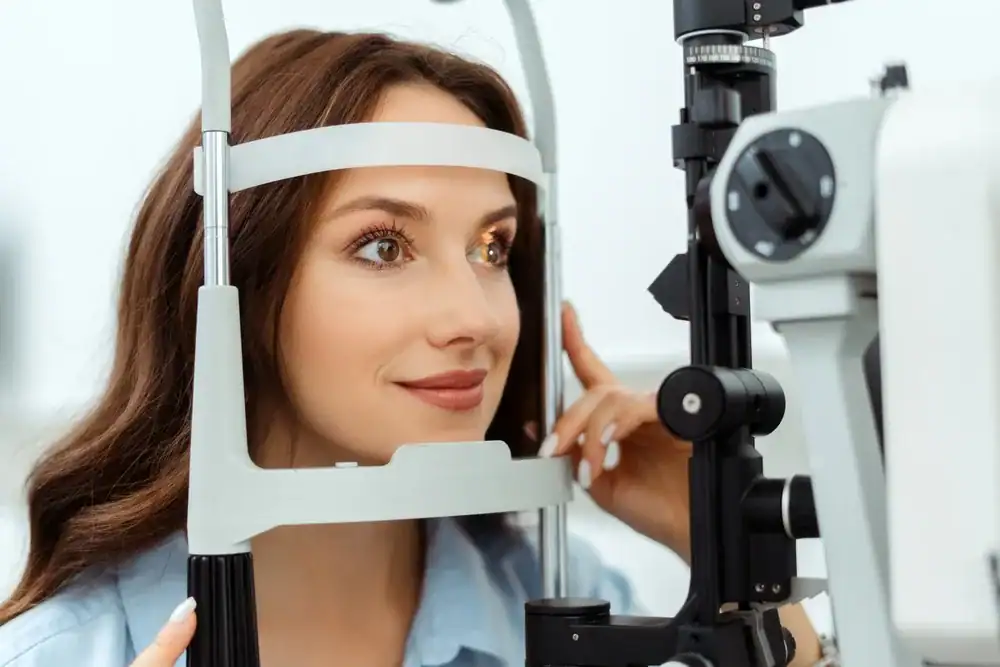
Eye checks. Make sure you get your eyes examined as often as advised (for most adults, this is every two years, but some people may need to be checked more frequently). If you notice any changes in your vision in the meantime, go back and get your eyes checked again.
Assess your meds: Some medications can make symptoms of Dry Eye Disease worse. “If possible, talk to your GP about alternative options to medication that exacerbates Dry Eye, such as topical and systemic antihistamines, tricyclic antidepressants, SSRIs, diuretics and beta blockers,” says Francesca Marchetti.
Try the 20: 20: 20 rule: A staggeringly high 56 % of Brits spend at least 5 hours looking at screens[17]. “Rest periods are so important when using a screen such as a phone, computer or TV. Even when you’re reading for long periods of time, you should factor in rest periods to blink. Every 20 minutes, look at something that’s 20 feet away from you, for 20 seconds,” says Francesca Marchetti.
Wipe off all makeup: The Rohto Dry Aid research found that 27% of women believed eye makeup could trigger a flare up of Dry Eye Disease[18]. “If your eyes are sore, avoid aggravating the eyes by keeping eyes clear of makeup, and when removing makeup, wipe across the eyelids gently,” adds Francesca Marchetti.
Take your lenses out: When possible, switch to glasses when you can, to give your eyes a break. “You may even be able to switch to lenses that don’t cause Dry Eye Disease,” concludes Francesca Marchetti.
Francesca Marchetti notes further: “Practising these simple tips, alongside using Rohto Dry Aid, helps to break the painful cycle of Dry Eye Disease and ensure your eyes remain the windows to your soul!”