Sustainable Home Materials: How to Build a Greener, Better Home

Share
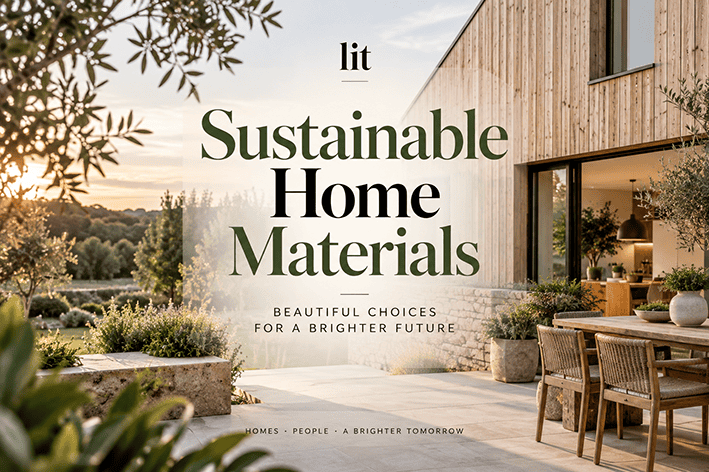
How Sustainable Materials Can Create a Home Built for the Future
Creating a home that’s both beautiful and kind to our planet is becoming a big deal for many homeowners. The choices we make when designing and building really stick with us, affecting not just the environment but also how we feel and our wallets. Sustainable design isn’t about giving things up; it’s about making smart, forward-thinking decisions that lead to a healthier, tougher, and more efficient place to live.
From the very bottom to the very top, every material adds to your home’s overall impact. Picking eco-friendly options helps you build or refresh a space that matches your values, cuts down on long-term costs, and gives you a fantastic living environment for years to come.
Why Sustainability Matters for Homes
Choosing sustainability for your home goes way beyond just being ‘green’. It’s a whole approach that brings real benefits for you and the wider world. A home built sustainably often uses less energy, which means lower utility bills month after month. You get this through better insulation, high-quality windows, and materials that hold heat well.
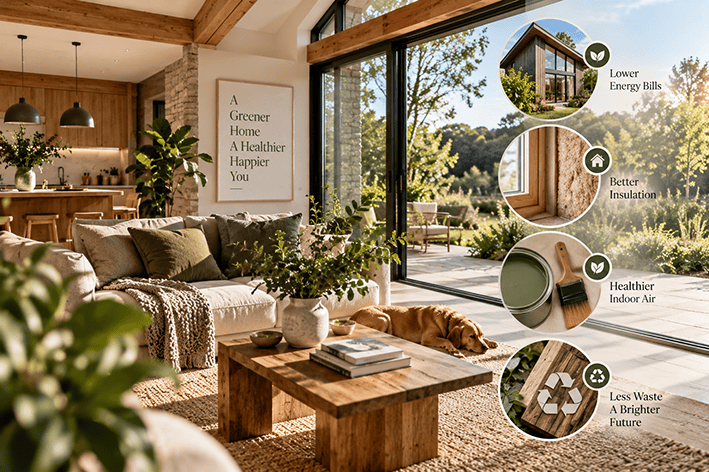
Plus, eco-friendly materials usually have fewer volatile organic compounds (VOCs). These are the chemicals that can seep out of regular paints, flooring, and furniture, making your indoor air quality worse. By going for natural, non-toxic choices, you create a healthier space for your family.
Thinking about a material’s whole life also cuts down on waste, as many sustainable products can be renewed, recycled, or biodegraded, easing the pressure on landfills. These are all key ideas when it comes to designing an eco-friendly home.
Choosing Materials for Longevity
A main idea behind sustainable design is how long things last. A material you have to replace every ten years is just not as sustainable as one that can last a lifetime. When you pick materials for their staying power, you’re using fewer resources, less energy, and less work down the line for replacing and getting rid of them. This ‘build it once, build it right’ way of thinking isn’t just better for the planet; it’s also a smart financial move.
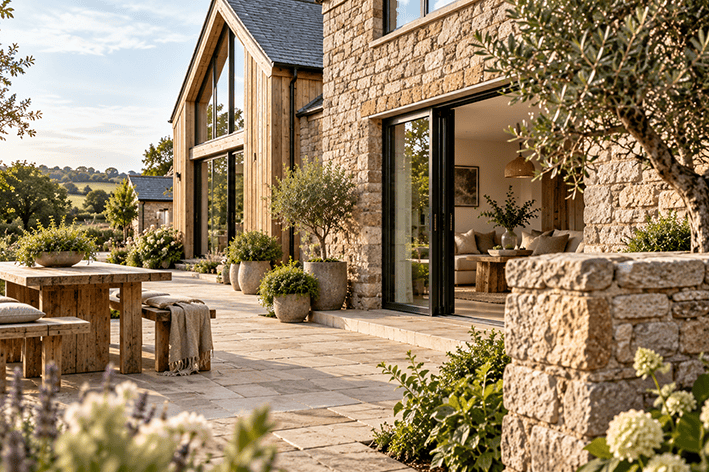
Think about things like reclaimed brick, natural stone, or tough cork flooring. These might cost a bit more upfront, but they pay for themselves over time because they’re so strong and don’t need much looking after. The same goes for outside finishes. Investing in sturdy materials that can handle the British weather without falling apart means fewer repairs and a home that keeps its value and looks great for much longer.
The Beauty of Natural Exterior Finishes
Your home’s exterior is the first thing people see, and natural materials offer a timeless, classy look that artificial ones often can’t match. Materials like stone, slate, and timber add texture, warmth, and character to a building’s front, helping it blend nicely with its surroundings. Wood, especially, is incredibly versatile.
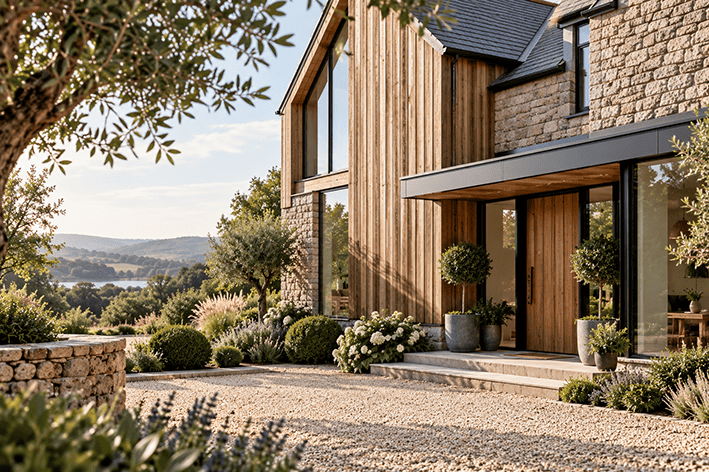
From the silvery-grey shine of old cedar to the rich, warm tones of larch, different types offer a huge range of colours and grain patterns. Picking the right timber for your house cladding can really define your property’s whole style, whether you’re going for a rustic country feel or a sharp, modern look. These natural finishes change over time, developing a unique character that adds to the building’s story.
Certified Timber for Your Project
When you’re using wood in your project, where it comes from is just as important as the type you choose. To make sure your design is truly sustainable, always look for timber that has a certificate from a recognised group, like the Forest Stewardship Council (FSC) or the Programme for the Endorsement of Forest Certification (PEFC).
These certificates promise that the wood was taken from a forest that’s managed responsibly. This means that environmental, social, and economic rules are followed, protecting wildlife, stopping deforestation, and making sure local communities and workers are treated fairly. By asking for certified timber, you’re directly supporting good forestry practices and making sure your beautiful wood features don’t harm the world’s precious forests.
Beyond Aesthetics: Performance Benefits
Eco-friendly materials don’t just look good; they often work better than their traditional counterparts. Natural materials can really help make your home comfortable and efficient. Wood, for example, is a natural insulator, helping to keep your home warm in winter and cool in summer. This thermal performance means you rely less on heating and air conditioning.
Many natural materials also ‘breathe’, meaning they can soak up and release moisture from the air. This helps keep indoor humidity levels just right, preventing problems with condensation and mould. Materials like lime plaster, sheep’s wool insulation, and wood fibre boards all contribute to a healthier, more comfortable indoor climate. This focus on how things perform is a key part of creating genuinely sustainable home decor.
Building a sustainable home is an investment in quality, health, and being responsible for the environment. By carefully choosing materials that last, are sourced responsibly, and perform well, you can create a space that’s not only beautiful but also truly built for the future.