
Low-Carbon Heating: How to Make Your Home Warmer and More Efficient

Share

How to Create a More Sustainable and Efficient Home Heating System
A low-carbon heating plan starts with the fabric of your home and ends with a system that delivers warmth without wasting energy. Replacing an ageing boiler may help, but insulation, controls, radiator sizing and everyday settings all affect the result. The most sustainable solution will suit the building, work efficiently at lower temperatures and remain serviceable for many years. Looking at the whole setup also helps you avoid expensive upgrades that deliver only modest savings.
Beyond Renewable Energy
Renewable heat sources can cut household emissions, yet the equipment alone cannot compensate for draughts or poorly insulated surfaces. Start by checking loft insulation, external doors, windows and exposed pipework. The overview of sustainable heating solutions covers options such as heat pumps and solar thermal systems, but each performs best in a home that retains heat effectively.

Window coverings deserve attention too. This guide to reducing heat loss and glare explains how suitable blinds can improve comfort around glazed areas. Simple measures like closing them after sunset and sealing obvious gaps can reduce demand before you invest in new heating equipment.
Longevity and Reduced Waste
A product’s service life forms part of its environmental impact. Heating equipment that can be repaired, refinished or adapted may avoid the material and transport costs associated with frequent replacement. Ask suppliers about spare parts, warranties and maintenance requirements before settling on a model.
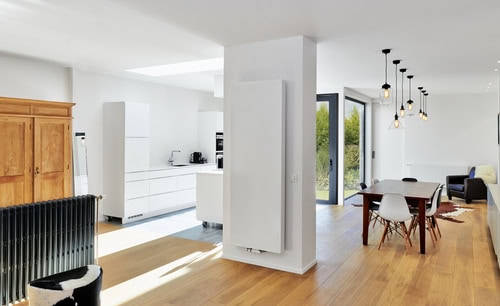
For period homes and interiors that need a traditional finish, a well-sized column radiator can provide a durable option in a choice of heights and finishes. Correct sizing matters more than appearance alone. Your installer should calculate the room’s heat loss, accounting for its dimensions, glazing and insulation, so the radiator can warm the space without forcing the system to operate harder than necessary.
The Thermal Mass Advantage
Materials with high thermal mass absorb heat and release it gradually. In a heating system, this can soften rapid temperature changes and keep a room feeling comfortable after the heat source cycles down. The effect is useful in frequently occupied spaces such as living rooms, where steady warmth may feel more pleasant than quick bursts of high heat.
Thermal mass still needs sensible control. A heavy radiator may take longer to respond, so avoid large thermostat changes and use a schedule that reflects when the room is occupied. Pairing room thermostats with thermostatic radiator valves lets you keep bedrooms cooler while maintaining warmth in shared areas. This zoning reduces unnecessary demand without leaving the whole home cold.
Choosing Efficient Systems
Match the heating technology to the property instead of following a single rule for every home. Heat pumps generally work most efficiently with lower flow temperatures, which may require larger radiators or underfloor heating. A well-maintained modern boiler can also perform more effectively when controls and emitters allow lower-temperature operation.
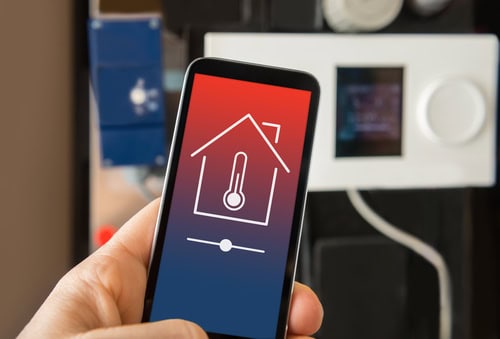
Before approving an installation, request a room-by-room heat-loss calculation and ask what flow temperature the design assumes. Check noise levels, available outdoor space and the electrical supply if you’re considering a heat pump. Plumbing deserves equal attention. Practical green plumbing solutions include efficient hot-water equipment and measures that reduce water waste, both of which can lower the energy used across the home.
Minimising Your Carbon Footprint
Set controls around your routine, then review actual energy use over several weeks. A one-degree reduction in the thermostat setting may produce a meaningful saving if the home remains comfortable, while heating unused rooms to the same temperature as living areas rarely makes sense. Keep furniture clear of radiators and bleed them if the upper section feels cold.

Annual servicing can identify inefficient operation, weak circulation and control faults before they raise consumption. Record meter readings during comparable cold periods to see whether changes are working, allowing for differences in weather. Once heat loss has been addressed, the final system can be sized for the home’s genuine needs. That creates a clearer path to lower temperatures, steadier comfort and equipment that lasts.

