Lead Generation Strategy: How to Turn Clicks Into Customers

Share

From Click to Customer: Building a Lead Generation Strategy That Converts
A strong digital marketing strategy does more than just bring people to your website; it turns them into valuable leads. In today’s crowded online world, simply getting a click isn’t enough anymore. Businesses need a clear process to guide potential customers from their first spark of interest to actually buying something, turning casual browsers into loyal fans. This means really understanding what users do, creating engaging content, and having a system to build relationships over time.
Mastering this process is how businesses grow steadily. It means making every interaction count, from the first ad someone sees to the follow-up email they get after downloading a resource. By focusing on the whole journey, not just the initial click, you can significantly boost your return on investment and create a steady stream of potential customers.
Understanding the Buyer Journey
Before you can even think about getting leads, you need to understand the path your potential customers take. We often call this the buyer journey, and it usually has three main stages: Awareness, Consideration, and Decision. In the Awareness stage, someone knows they have a problem but might not know what to call it. During the Consideration stage, they’ve identified their problem and are looking into solutions. Finally, in the Decision stage, they’re comparing specific options and are ready to buy.
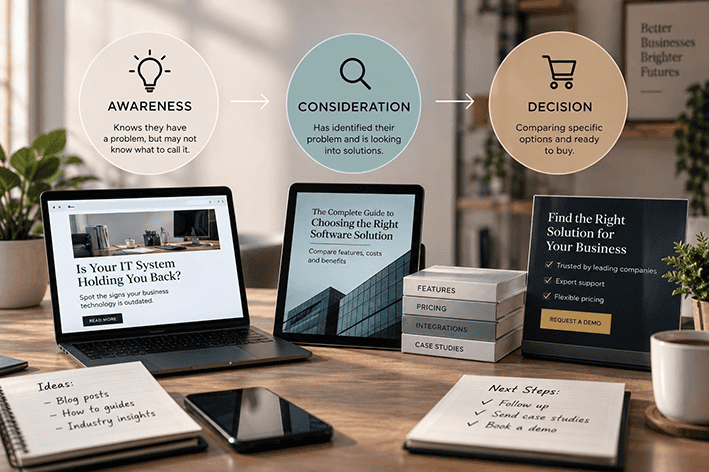
It’s crucial to match your content and marketing efforts to these stages. For example, a blog post explaining the signs of an outdated IT system would appeal to someone in the Awareness stage. A guide comparing different software solutions would be perfect for the Consideration stage. Knowing this helps you create a more targeted and effective guide to lead generation.
Strategies for Generating Leads
Once you understand the buyer journey, you can start using specific strategies to attract potential customers. Content marketing is a powerful way to do this. It involves creating valuable resources like blog posts, ebooks, white papers, or webinars. These pieces of content draw in your target audience by offering solutions to their problems. Search Engine Optimisation (SEO) makes sure this content shows up on search engines like Google, while social media marketing helps you share it with more people. Building a strong digital presence for your business can also help you reach customers online and create more opportunities for engagement.
The best strategies are highly specific to each industry. For instance, how you approach digital marketing for car dealerships will be very different from how you sell business-to-business software. The key is to figure out where your target audience spends their time online and then create content that directly addresses their needs and questions.
Crafting Effective Landing Pages
A landing page is a special webpage built with one clear purpose: to get a lead. When someone clicks an ad or an email link, they should land on a page that’s focused, convincing, and easy to understand. A good landing page usually has a strong, clear headline, short copy that highlights benefits, and one obvious call to action.
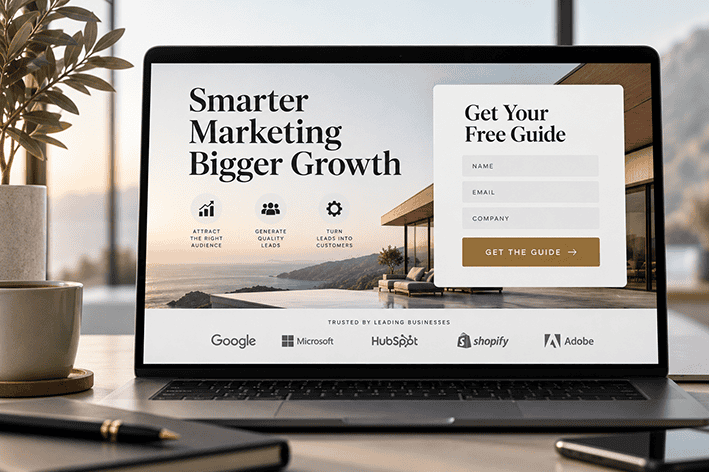
To get more conversions, remove anything that could distract visitors. This means no navigation menus, sidebars, or other links that might tempt them to click away before they’ve submitted their information. Add social proof, like customer testimonials or logos of well-known clients, to build trust. Every part of the page should support the single goal of getting that conversion, which is a core idea in marketing program planning.
Calls to Action That Convert
The Call to Action (CTA) is arguably the most important part of your lead generation efforts. It’s the button or link that tells the user what to do next, like “Download the Guide” or “Request a Demo”. A weak or generic CTA, such as “Click Here” or “Submit,” will get far fewer conversions than one that’s specific, action-oriented, and creates a sense of urgency.
Your CTA should really stand out visually with contrasting colours and clear, compelling text. The words you use should tell the user what value they’ll get. For example, instead of “Subscribe,” try “Get Weekly Marketing Tips.” Place your CTAs strategically where people are most likely to be ready to act, like at the end of a blog post or next to a product description.
Nurturing Leads into Customers
Getting a lead is just the start. Very few leads are ready to buy right away. This is where lead nurturing comes in. Lead nurturing is all about building relationships with your leads and giving them useful information at each step of their decision-making process. Email marketing is one of the most effective ways to do this.

Setting up automated email sequences helps you send targeted content to your leads based on what they’re interested in and what they do. For example, if someone downloads an ebook about social media marketing, you could follow up with a series of emails offering more advanced tips, case studies, and eventually an invitation to a webinar on the topic. This gradual process builds trust and keeps your brand in their mind, guiding them towards a sale when they’re ready.
Ultimately, turning clicks into customers requires a thoughtful and systematic approach. By optimising each stage of the process, from attracting initial interest to nurturing relationships long-term, you can build a reliable engine for business growth.