Precision Engineering: How It Drives Product Innovation

Share
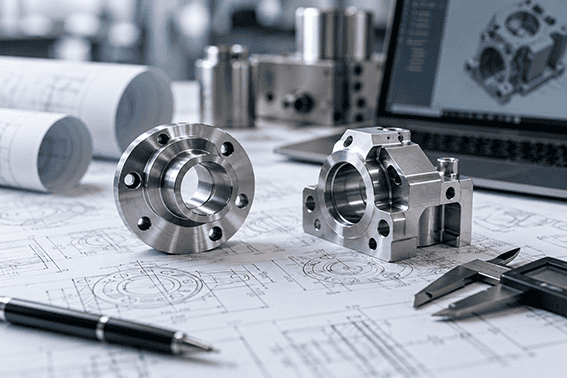
How Precision Engineering Turns Innovative Ideas Into Real Products
A brilliant product concept is only the first step on the long road to market success. The journey from a great idea to a tangible, reliable, and profitable product is paved with countless technical challenges.
In a competitive global market, the companies that thrive are those that master the art of turning innovative designs into physical reality. This is where precision engineering becomes not just a manufacturing discipline, but a fundamental driver of business innovation, providing the accuracy and quality needed to bring complex ideas to life.
The Pace of Modern Innovation
Businesses today operate under immense pressure to innovate faster than their competitors. Product lifecycles are shrinking, particularly in sectors like consumer electronics, automotive technology, and medical devices. Gaining a first-mover advantage can define a product’s success, but rushing a product to market with design flaws or manufacturing defects can be catastrophic for a brand’s reputation and bottom line. This relentless pace demands a development process that is both fast and flawless.

Companies can no longer afford lengthy trial-and-error cycles. Instead, they need manufacturing partners and processes that can deliver quality and accuracy from the very first attempt, ensuring the final product perfectly matches the design intent.
Why Precision Matters in Development
Many of today’s most innovative products succeed or fail based on components measured in microns. In fields like medical diagnostics or aerospace, a single microscopic flaw can lead to complete failure. This is why precision is non-negotiable. It ensures every part fits, functions, and performs exactly as intended, every single time. Achieving this level of accuracy, especially at a small scale, requires specialised knowledge and advanced manufacturing techniques.
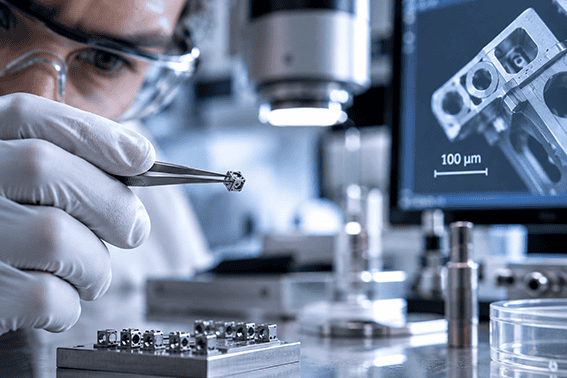
For businesses focused on research and design, collaborating with a manufacturing expert is often the most effective path forward. This is where specialist partners like Tecan can provide essential expertise in micro-manufacturing. Focusing on R&D’s role in precision manufacturing is critical, as it bridges the gap between theoretical design and a functional, market-ready component.
Rapid Prototyping for Competitive Edge
Before committing to mass production, companies must test and refine their designs. Rapid prototyping allows engineers and designers to create physical models quickly, enabling them to evaluate ergonomics, fit, and function. This iterative process is essential for identifying potential problems early and making necessary adjustments. However, a prototype is only useful if it accurately represents the final product.
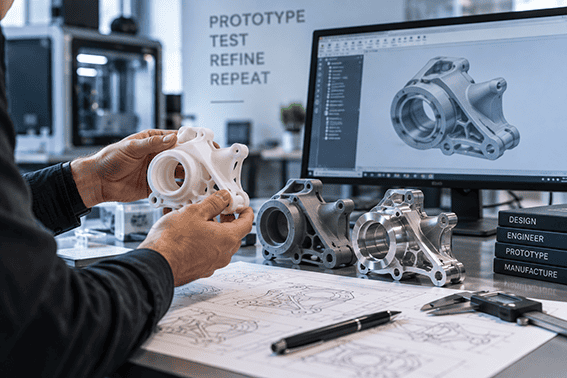
Precision engineering ensures prototypes are built to the same exacting standards as the finished item. This high-fidelity approach provides reliable data from testing, reduces the number of design cycles, and significantly shortens the time-to-market. A precise prototype allows a company to move forward with confidence, knowing their design is viable and ready for scaling.
Overcoming Manufacturing Challenges
Scaling a product from a single successful prototype to millions of units presents a new set of challenges. Maintaining consistent quality across a large production run is a common hurdle, as is working with advanced or difficult-to-machine materials. Many innovative designs involve complex geometries that traditional manufacturing methods struggle to produce reliably and cost-effectively.
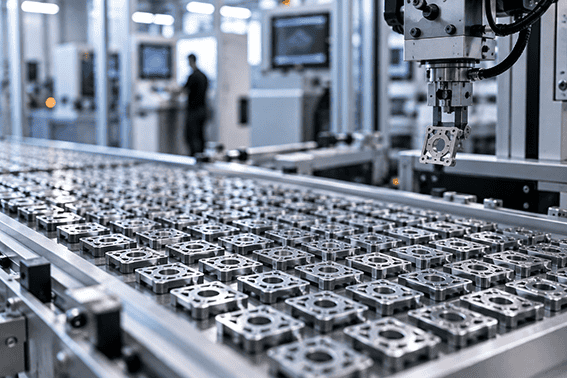
Precision engineering methodologies, such as photo-chemical machining, offer solutions to these problems. These processes are highly repeatable, ensuring the millionth part is identical to the first. They also allow for the creation of intricate features and complex shapes without adding stress to the material, giving designers greater freedom to innovate without being constrained by manufacturing limitations.
Future Trends in Component Design
The demand for smaller, smarter, and more efficient products continues to drive innovation in component design. We are seeing a powerful trend towards miniaturisation across all industries, from portable medical sensors to compact communication devices. This involves packing more functionality into smaller spaces, which requires components of incredible complexity and precision.
Furthermore, the development of new alloys, polymers, and composite materials opens up new possibilities for product performance, but also requires new manufacturing techniques to shape and form them. As we look ahead, the future trends in precision engineering point towards even greater integration of digital technology, automation, and advanced metrology to meet these evolving demands.
Embracing precision engineering is not merely a technical choice, but a strategic business decision. For any company involved in creating physical products, it is the foundation upon which true, sustainable innovation is built.