Construction Budget Overruns: Why Costs Rise Before Building Starts

Share

Why Construction Projects Go Over Budget Before Work Even Begins
Construction budgets can appear well controlled on paper, yet many projects begin to exceed their expected cost long before the first worker arrives on site. By the time materials are ordered, contractors are appointed or foundations are started, early assumptions may already have created a financial gap.
This does not always mean that a project has been poorly managed. Construction involves uncertainty, changing requirements and market pressures. However, understanding the common causes of pre-construction overspend gives clients and project teams a far better chance of protecting the budget from the outset.
Incomplete Project Briefs Create Costly Uncertainty
A clear project brief is the starting point for a realistic budget. It should outline the purpose of the build, required spaces, preferred materials, quality expectations, timescales and key constraints.

When these details are vague, early cost estimates are often based on broad assumptions. As the design develops, the client may add features, change finishes or require additional performance standards. Each individual adjustment may seem manageable, but together they can substantially increase the project cost.
For example, a commercial refurbishment may initially allow for standard finishes, only for the brief later to require specialist acoustic treatment, upgraded electrical capacity and bespoke joinery. These changes are easier and less expensive to manage when they are identified before the budget is fixed.
Early Estimates May Not Reflect the Full Scope
An initial estimate is useful for assessing whether a project is viable, but it is not the same as a detailed cost plan. Early figures can exclude important elements simply because sufficient information is not yet available.

Common omissions include:
- Site surveys and investigations
- Planning conditions and compliance requirements
- Utility connections or diversions
- Demolition and enabling works
- Professional fees
- Temporary works
- Landscaping and external works
- Contingency for unknown risks
A low initial estimate can create unrealistic expectations. If decision-makers approve the project based on an incomplete figure, the eventual budget may feel like an overrun even though the true scope was never fully priced.
The Importance of a Detailed Cost Plan
A detailed cost plan breaks the project into measurable packages and allows the team to test assumptions before committing to major decisions. It also highlights where the budget is most exposed, such as specialist systems, groundworks or complex structural changes.
This gives clients choices early enough to make a difference. They may decide to simplify a design, select alternative materials or phase certain elements of the work.
Design Changes Add Up Before Construction Begins
Design development is essential, but frequent changes can quickly affect cost. A revised layout may alter structural requirements. A new façade choice may require different fixings, insulation or fire-performance measures. Even a change in room use can affect services, ventilation and finishes.
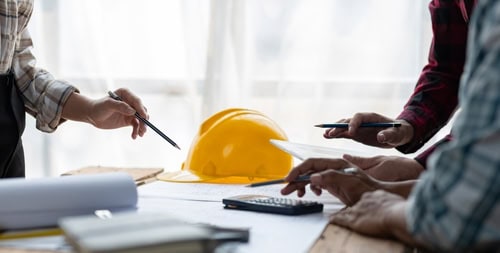
The challenge is not that designs evolve. It is that changes are sometimes made without checking their full impact on cost, programme and coordination.
Avoid Making Decisions in Isolation
Design decisions should be reviewed by the relevant project professionals before they are approved. Architects, engineers, quantity surveyors and contractors can help identify the likely consequences of a change across the wider project.
Experienced teams such as SW Project Management can support this coordination, helping clients make informed decisions that balance design ambitions with budget, programme and delivery requirements.
Ground Conditions and Site Constraints Are Underestimated
A site can hold expensive surprises. Poor ground conditions, restricted access, contamination, drainage issues, existing structures and hidden utilities can all increase costs before construction has properly begun.

Skipping surveys to save money is often a false economy. A topographical survey, ground investigation, asbestos survey or utility search may uncover factors that significantly influence the design and construction method.
For instance, a project planned on sloping ground may require more extensive retaining structures than expected. Identifying this early allows the design and budget to account for it properly, rather than forcing reactive changes later.
Planning, Building Regulations and Compliance Costs Are Missed
Planning permission and building regulations are central to project delivery, but the time and cost involved can be underestimated. Conditions attached to planning approval may require ecology reports, drainage measures, transport assessments or specific landscaping arrangements.
Building regulations can also affect thermal performance, fire safety, accessibility, ventilation and structural design. These requirements should be considered from the earliest stages, rather than treated as final checks once the design is complete.
A project that does not allow for compliance costs from the start may need redesign work, additional reports or upgraded materials before it can proceed.
Market Changes Affect Labour and Material Prices
Construction prices can change between the first estimate and the start of work. Labour availability, supplier lead times, fuel costs and demand for specialist materials all affect the final price.
While no team can remove every market risk, early procurement planning can reduce uncertainty. Identifying long-lead items, obtaining current supplier quotes and agreeing the right procurement route can help create a more reliable budget.
It is also sensible to include a realistic contingency. Contingency is not spare money to be spent freely. It is a planned allowance for risks that cannot yet be fully defined.
Poor Programme Planning Raises Costs
An unrealistic programme can create hidden cost pressure from the beginning. If the timeline does not allow enough time for surveys, design coordination, approvals and procurement, the project may require rushed decisions or urgent orders.

Accelerating work can lead to higher labour costs, reduced supplier choice and avoidable errors. A well-planned pre-construction programme allows the team to sequence decisions properly and reduce the need for expensive last-minute solutions.
Frequently Asked Questions
Why do construction projects exceed their original budget?
Projects often exceed their original budget because early estimates do not include the full scope, design changes are not costed properly, or site and compliance risks are discovered too late.
How can clients prevent construction budget overruns?
Clients can reduce the risk by developing a detailed brief, commissioning relevant surveys, using an accurate cost plan and reviewing the financial impact of design decisions before approving them.
Should a construction budget include contingency?
Yes. A realistic contingency provides an allowance for unforeseen risks, particularly during the early stages when some site conditions and technical details may still be unknown.
When should cost planning begin on a construction project?
Cost planning should begin as soon as a project is being considered. The budget should then be reviewed and refined as the design, site information and procurement strategy develop.
Conclusion
Construction projects do not usually go over budget because of one dramatic mistake. More often, costs rise through incomplete information, unclear scope, late design changes and risks that were not investigated early enough.
A disciplined pre-construction process helps turn assumptions into informed decisions. By investing time in the brief, surveys, cost planning and programme coordination, clients can begin work with a budget that is more realistic, resilient and easier to manage.