Be a mindful traveller in 2025 by visiting these destinations

Share
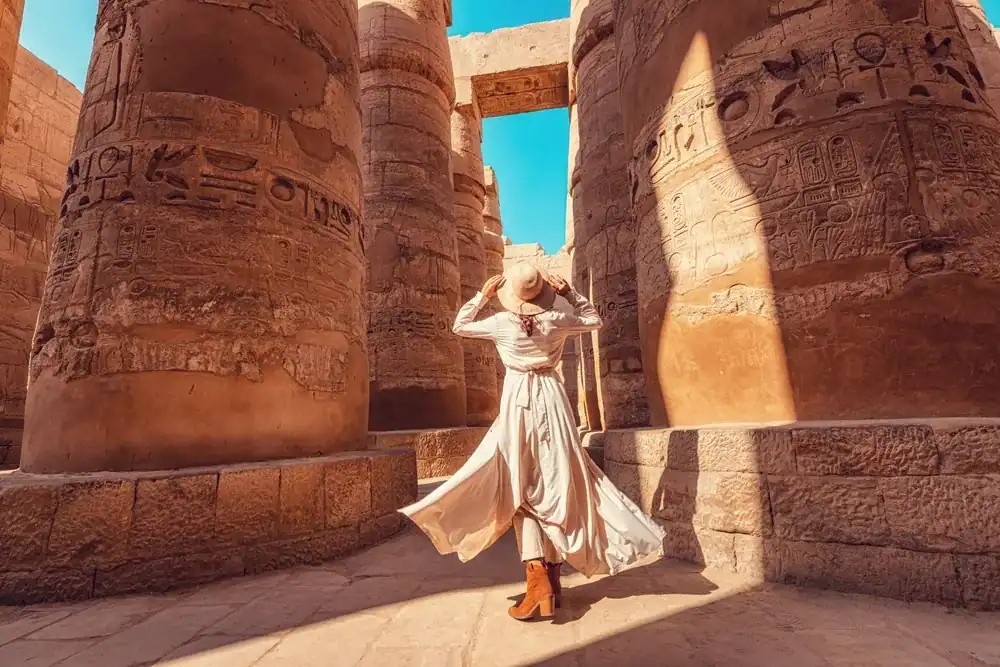
Exploring ancient ruins has become a must for travellers who are seeking to visit destinations rich in history. With cultural heritage tourism on the rise, its appeal is not only for archaeology and academic fans. Visiting ancient ruins is a great way to shield historical traditions, sites and practices.
These majestic destinations offer tourists an unparalleled cultural experience and a sense of accomplishment for having truly experienced a country. Being a ‘slow’ tourist’, travelling mindfully and taking the time to endorse yourself in history, not only has a huge impact on cultural education, but it also contributes to supporting the heritage of ancient sites.
But with hundreds of ancient ruins located in the heart of busy cities, over-tourism can negatively impact the experience, diluting the landmark’s identities and significance.
Saga Holidays has analysed 25 of the world’s best rated ancient landmarks to find out which are most loved by tourists and when to visit them to beat the crowds, offering plenty of time to discover the true essence of these global wonders.
Saga itself has seen bookings increase by two-thirds year-on-year for special interest holidays, a testament of the rising demand for these alternative holidays.
The highest-rated ancient ruins across the world
Analysing the number of annual visitors compared to the percentage of five-star reviews, Saga has compiled a list of the best ancient ruins to visit that come highly recommended by fellow travellers.
| Rank | Place | Country | When to visit | No of Annual Visitors | % of 5-Star Reviews |
| 1 | Tikal | Guatemala | Nov – Apr | 200,000 | 90% |
| 2 | Calakmul | Mexico | Nov- Apr | 36,500 | 80% |
| 3 | Abu Simbel | Egypt | Apr – May | 110,00 | 80% |
| 4 | Petra | Jordan | Mar – May | 900,000 | 80% |
| 5 | Machu Picchu | Peru | Apr – May | 1,500,000 | 80% |
| 6 | Teotihuacán | Mexico | Oct – May | 1,700,000 | 80% |
| 7 | Ephesus | Turkey | Apr – May | 2,200,000 | 80% |
| 8 | Chichen Itza | Mexico | Nov – Apr | 2,200,000 | 80% |
| 9 | Montezuma Castle | USA | Sept – Nov | 350,000 | 70% |
| 10 | Angkor Wat | Cambodia | Nov – Mar | 2,500,000 | 80% |
| 11 | Volubilis | Morocco | Mar-May | 100,000 | 60% |
Tikal National Park
Tikal is a complex of Mayan ruins in Guatemala and is considered one of the most important archaeological complexes left by the Mayan civilization. Unlike Chichen Itza, Tikal has a relatively low number of annual visitors at 200,000, but also has one of the highest review scores globally with 90% of visitors’ reviews being five stars.
The site was designated a UNESCO World Heritage site in 1979 and contains several palaces, temples, and ceremonial platforms, many of which have preserved decorated surfaces, including stone carvings and mural paintings.
The best time to visit is from November to April as this is the dry season. The quietest months are from January to March.
Calakmul
Another ancient Mayan city, Calakmul is home to the highest pyramid in the Mayan world standing at a height of 164 feet (50 meters) and 400 feet (130 meters) square.
Thanks to its low visitor numbers of 36,500 per year, the site is a lot quieter than other Mayan ruins but also has a high review score with 80% of visitors’ reviews being five stars.
The site and the entire surrounding area were designated a UNESCO World Heritage site in 2002, including the Mesoamerica biodiversity hotpot which helps to protect the native rainforests and subtropical ecosystems.
Like other locations in Latin America, the best months to visit are from November to April, during the dry season when the temperatures are typically lower.
Abu Simbel
Located on the western bank of Lake Nasser in Egypt, the two rock-cut temples of Abu Simbel are regarded as one of Egypt’s best ancient attractions with 80% of its visitor reviews being five stars.
Unlike the Pyramids, Abu Simbel has relatively low annual visitor numbers of 110,000 so this makes it a perfect choice to explore the wonders of the ancient Egyptians.
What makes the site stand out are the four 20-meter-tall, seated figures of Ramses carved into the recessed face of the cliff in front of the Great Temple.
Another unique feature of the site is its modern-day history, as the temples were both moved 65 metres higher up the rock face to account for the rising water levels caused by the Awan High Dam. In 1964 UNESCO along with a team of archaeologists carefully dismantled and reassembled each of the temples to save them from becoming completely submerged in the rising waters.
The best time to visit the site is during March and April to avoid the intense summer heat and large crowds. The annual Abu Simbel Sun Festival on February 21st, and October 21st is also a special time to visit as this is when the sun’s rays perfectly align with the temple to illuminate the sculptures on the back wall.
Petra
The ancient city of Petra rounds off the top five ranking with 900,000 annual visitors with 80% of visitors’ reviews being five stars. It is one of the world’s most famous archaeological sites and was designated a UNESCO World Heritage site in 1985.

The city, located in Jordan, was once a thriving trading centre and the capital of the Nabataean empire between 400 BC and AD 106. The ‘Rose-Red City’ is famed for being half-built, and half-carved into the surrounding rockfaces and gorges.
The best time to visit is from March to May when the temperatures are slightly cooler and there are fewer crowds to contend with.
Machu Picchu
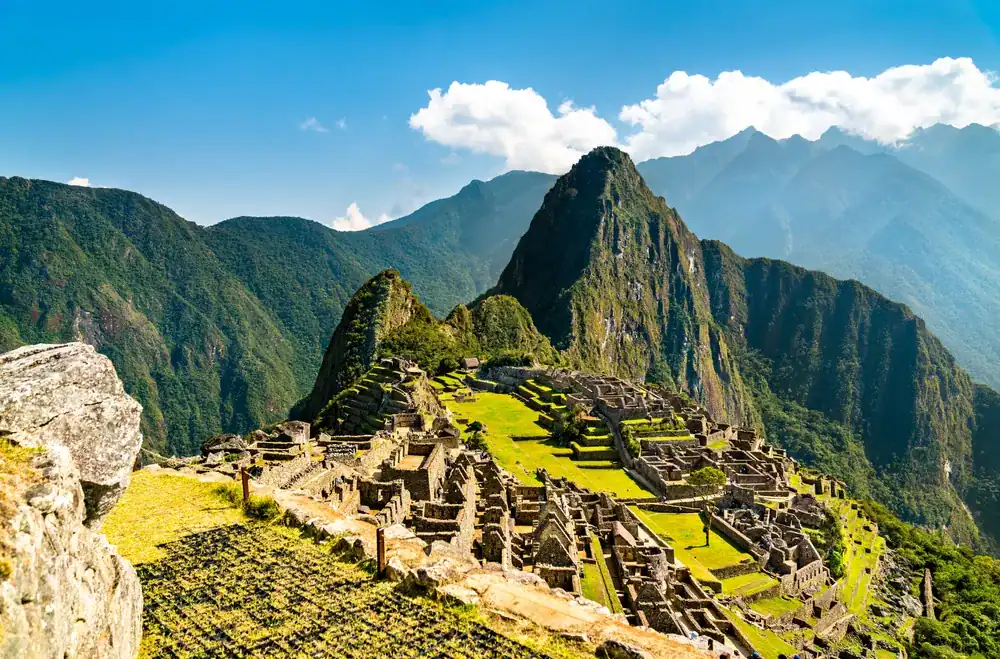
Another world-famous ruin is the ancient Inca site of Machu Picchu located in the Andes Mountains in Peru. This 15th-century citadel complex attracts 1.5 million visitors each year with 80% of its reviews being five stars.
The site was designated a UNESCO World Heritage site in 1983 and is regarded as the most familiar icon of the Inca Empire. Its three primary structures are the Temple of the Sun, the Temple of the Three Windows, and the Intihuatana – a notable ritual stone associated with the astronomic calendar.
One of the best times to visit Machu Picchu is April and May as the rainy season has passed and there are typically fewer crowds.
Teotihuacán
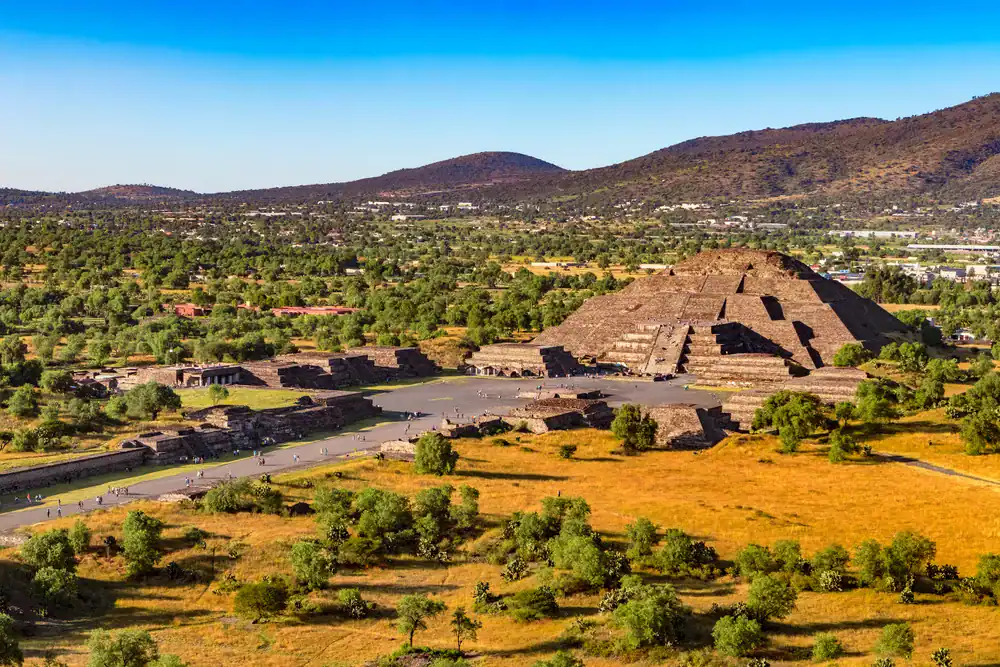
Teotihuacan is one of the archaeological sites with the longest history of exploration in Mexico, predating the Aztec civilization by 1,000 years. It is famed for its vastly sized monuments including the Temple of Quetzalcoatl and the Pyramids of the Sun and the Moon.
It was designated a UNESCO World Heritage Site in 1987 and is visited by approximately two million people annually. Out of its 22,000 visitor reviews, 80% gave a rating of five stars earning its place in the top ten ranking.
The best time to visit is from October to May as this is the dry season in Mexico but the temperatures are still milder than the hot summer months.
Ephesus
The ancient Greek city of Ephesus in present-day Turkey is one of the most well-preserved Greek ruins in the world. It receives over two million visitors each year with 80% of visitors’ reviews being five stars. The site was also granted a UNESCO World Heritage status in 2015.
What is unique about Ephesus is its Greek and Roman background. It was one of the oldest Greek settlements on the Aegean Sea, and later became the second largest city in the Roman Empire, after Rome.

The best time of year to visit is in April and May as the temperatures are milder and the site is less crowded.
Chichen Itza
The city of Chichén Itzá was once a centre of culture and religion for the ancient Mayan people, located in present-day Mexico. Today the ruins of the city are a major archaeological site that attracts over two million visitors each year with 80% of visitors’ reviews being five stars.
A massive step pyramid, known as El Castillo or Temple of Kukulcan, dominates the ancient city and surrounding natural environment. The entire area was designed a UNESCO World Heritage Site in 1988.
The equinoxes on March 21 and September 22 are popular dates to visit since the sun creates a shadow resembling a serpent descending the pyramid’s staircase. Outside of this, November to April is a good time to visit when the weather is mild, and crowds are smaller.
Montezuma Castle National Monument
Located in Camp Verde, Arizona, Montezuma Castle was built and used by the Singagua people and is situated 90 feet (27 meters) up a vertical limestone cliff.
It is one of the best-preserved cliff dwellings in North America attracting 350,000 visitors each year with 70% of visitors’ reviews being five stars.
The dwellings and surrounding area were declared a US National Monument in 1906 with the visitor centre including a museum about the Sinagua culture displaying the tools they used to build the dwellings.
The best times to visit the monument are from September to November during the autumn season as the temperatures are typically mild and the sycamores and cottonwood trees are displaying their bright autumn colours.
Angkor Wat
The famous Hindu-Buddhist temple of Angkor Wat in Cambodia is considered one of the great cultural wonders of the world. It was designed as a UNESCO World Heritage site in 1992.
The site attracts 2.5 million annual visitors making it Cambodia’s most visited attraction. It is highly recommended, with 80% of visitors’ reviews being five stars.
Angkor Wat is also the world’s largest religious structure, covering approximately 400 acres. It was built by the Khmer King Suryavarman II in the first half of the 12th century, around the year 1110, making the temple complex almost 900 years old.
The best time of year to visit is from November to March as this is the dry season. Khmer New Year is celebrated in April making it very crowded.
Volubilis
Surrounded by olive orchids and farmlands, Volubilis is located near the Moroccan Islamic holy city of Moulay Idriss and is 33km north of Meknes. Visiting both sites easily makes a splendid day drip from Meknes or Fez.
Volubilis is truly a place of wonder, having been inscribed on the UNESCO World Heritage list in 1997 for its stunning preservations. Whilst most tourists spend their time marvelling Marrakesh, around 100,000 annual visitors make the trip to see the site of Volubilis.
The ruins uncover grand Roman structures, including majestic columns, intricate mosaics and Roman baths. The Moroccan sunsets highlight the marvels of the archaeological site, so dusk is a perfect time to roam around and soak in the site during a Moroccan golden hour.
Preservation and experience of culture in Volubilis happens through conservation of its ruins and archaeological research. Archaeologists endeavour to study and research this archaeological site so that tourists can absorb its beauty and take their time to understand the cultural importance of Volubilis in ancient times.
For the full top 25 ranking with a round-up of ancient sites from each continent, please see the Saga website: https://holiday.saga.co.uk/blog/ancient-wonders-of-the-world