What Are Exosomes and How Can They Help Reduce the Signs of Skin Ageing?

Share

Exosome Skincare Explained: The Science Behind Healthier, Younger-Looking Skin
As we move through our late twenties and thirties, subtle changes in our skin often begin to appear. Fine lines become more noticeable, skin can take longer to recover from damage, and firmness gradually starts to decline. While these changes are a natural part of ageing, they are also linked to a reduction in the way skin cells communicate and repair themselves.
This is where exosome skincare comes in. Emerging technologies, including those used by Calecim Professional, focus on supporting the skin’s natural regenerative processes by improving cellular communication rather than simply masking the visible signs of ageing.
The Role of Exosomes in Skin Regeneration
Exosomes are tiny, naturally occurring vesicles released by cells. Their role is to act as messengers, carrying proteins, lipids and genetic material between cells to support repair and regeneration throughout the body.
In healthy skin, constant communication between cells is essential for collagen production, inflammation control and tissue repair. Research published in the International Journal of Molecular Sciences highlights the important role exosomes play in wound healing and tissue regeneration by delivering growth factors and signalling molecules where they are needed most.
In skincare, exosome-based products aim to:
- Support collagen and elastin production
- Encourage faster skin recovery
- Help reduce inflammation
- Improve overall skin function at a cellular level
Rather than focusing solely on the skin’s surface, this approach targets the biological processes that contribute to healthy, youthful-looking skin.
Understanding the Signs of Ageing Skin
Skin ageing is influenced by both internal and external factors.
Internally, the body gradually produces less collagen and elastin as we age. Research suggests collagen production declines by around one per cent each year after early adulthood, contributing to fine lines, wrinkles and reduced elasticity.
Externally, environmental factors such as UV exposure and pollution can accelerate the ageing process. These stressors create oxidative damage within the skin, affecting its ability to repair itself effectively. The National Institutes of Health identifies oxidative stress as one of the key drivers of premature skin ageing.

The American Academy of Dermatology also notes that the breakdown of collagen and elastin contributes to sagging skin, uneven texture and the development of fine lines.
What is often overlooked is that ageing skin reflects more than visible changes. It also indicates a decline in the skin’s ability to communicate and regenerate efficiently at a cellular level.
The Science Behind Calecim Skincare
Exosomes belong to a broader group known as extracellular vesicles, which transport biological signals between cells. These signals are of particular interest in dermatology because they influence how skin repairs and renews itself.
Studies available through PubMed suggest that stem cell-derived exosomes may support wound healing, collagen synthesis and tissue regeneration by enhancing cellular signalling pathways.
In exosome skincare, these vesicles help deliver:
- Growth factors that support collagen production
- Proteins that help maintain skin structure
- Anti-inflammatory signals that calm stressed skin
Calecim Professional Serum builds on this science through its proprietary stem cell-derived conditioned media, which contains exosome-like vesicles and regenerative signalling molecules.
Rather than encouraging rapid exfoliation or aggressive skin turnover, this approach supports the skin’s own natural repair mechanisms.
A Smarter Approach to Skin Health
Modern skincare is increasingly moving towards regenerative solutions that support long-term skin health rather than providing only temporary cosmetic improvements.
Calecim Professional reflects this shift by focusing on biological signalling and skin recovery.
What Is PTT-6 Technology?
PTT-6 is a proprietary formulation derived from stem cell-conditioned media. It contains proteins, growth factors and signalling molecules, including exosome-like vesicles, that work together to support skin regeneration.
These components may help to:
- Encourage collagen synthesis
- Support post-treatment recovery
- Assist in regulating inflammation after skin stress
This regenerative approach aligns with growing interest within dermatology in supporting the body’s natural repair processes rather than relying solely on topical correction.
Key Benefits of Using Calecim
Exosome-inspired formulations are increasingly being used alongside professional aesthetic treatments and are associated with several potential benefits.
Improved Skin Texture and Tone
By supporting cellular repair processes, skin may appear smoother and more even over time.
Reduced Appearance of Fine Lines
Improved collagen production can help strengthen the skin’s structure and improve firmness.
Faster Recovery After Procedures
Exosomes have shown promise in supporting wound healing and reducing inflammation, making them popular following treatments such as microneedling and laser procedures.
Support for Hair and Scalp Health
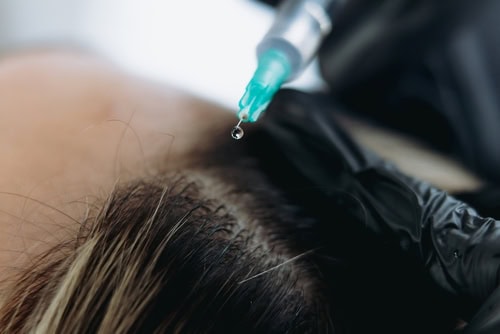
Emerging research suggests exosome technologies may help create a healthier environment around hair follicles, potentially supporting stronger hair growth.
The Journal of Drugs in Dermatology has highlighted growing clinical interest in the use of exosomes to improve outcomes following aesthetic treatments.
When Is Calecim Commonly Used?
Exosome-based skincare is often recommended when the skin requires additional support for healing and regeneration.
Common uses include:
- Following microneedling treatments
- After laser procedures
- During menopause, when collagen loss accelerates
- As part of an early anti-ageing skincare routine
- To support sensitive or compromised skin barriers
- Following certain hair restoration procedures
Many dermatology clinics now incorporate regenerative skincare approaches alongside more traditional treatments.
Frequently Asked Questions
What are exosomes in skincare?
Exosomes are microscopic vesicles that carry signals between cells. In skincare, they help improve communication between skin cells, supporting repair and regeneration.
Are exosomes safe for the skin?
Current research suggests that properly sourced and formulated exosome technologies are generally well tolerated. Professional guidance is recommended when considering advanced treatments.
How long does it take to see results?
Improvements in hydration and skin texture may become noticeable within a few weeks, while collagen-related changes typically develop over several months.
Can exosomes help with hair loss?
Early studies suggest they may support hair follicle health, although further long-term clinical research is needed.
Are exosomes better than retinol?
They work differently. Retinol accelerates cell turnover, while exosomes focus on cellular communication and repair. Many people choose to incorporate both into a balanced skincare routine.
Final Thoughts
Exosomes represent an exciting development in regenerative skincare. By supporting the way skin cells communicate and repair themselves, exosome-based products offer a science-led approach to maintaining healthier-looking skin.
Research from dermatology journals, PubMed and the National Institutes of Health continues to highlight the importance of cellular signalling in skin health and regeneration. While the field is still evolving, technologies such as those used by Calecim Professional point towards a future where skincare focuses not only on appearance, but on supporting the skin’s long-term function and resilience.
As with any advanced skincare treatment, informed decisions and professional advice remain essential to achieving the best possible results.