
Is Your Period Normal? Red Flags Women Shouldn’t Ignore and Self-Care That Helps

Share

How Normal Is Your Period? Signs to Watch Out For and Self-Care Tips
How Normal Is Your Period? From Heavy Flows To Crippling Pain, Expert Reveals The Red Flags To Watch Out For And What Self-Care Help To Take
On average, women will have around 450 periods over the course of their lifetime,[1] typically one every 28 days.[2] With each period lasting between two and seven days,[3] that’s a significant amount of time spent menstruating.
For many women, periods are more than just a monthly bleed: they can have a huge impact on day-to-day life with period pains and a heavy flow making daily tasks difficult.
But how do you know if your periods are normal or a potential cause for concern? Research commissioned by Evana®[4] – the over-the-counter treatment for heavy menstrual bleeding – found that of those women surveyed, 45% are worried that talking about periods makes others feel uncomfortable. This can make it difficult to know what other women are experiencing.
GP, Dr Nisa Aslam with a special interest in women’s health says: “A heavy flow and period pains that stop you living life normally, can often be period red flags.
Of those surveyed by Evana®:
18% wouldn’t go on holiday whilst on their period
23% booked their wedding around their cycle to avoid being on their period on their big day.
18% said they didn’t wear the classic white on their wedding day for fear of leaking.
This just shows the impact that disruptive periods can have.”
But it needn’t be this way. As 58% of those questioned agree that there’s a general lack of education around menstrual health, Dr Nisa Aslam reveals the period red flags to look out for and the self-help care that can help to make things more comfortable…
Heavy periods
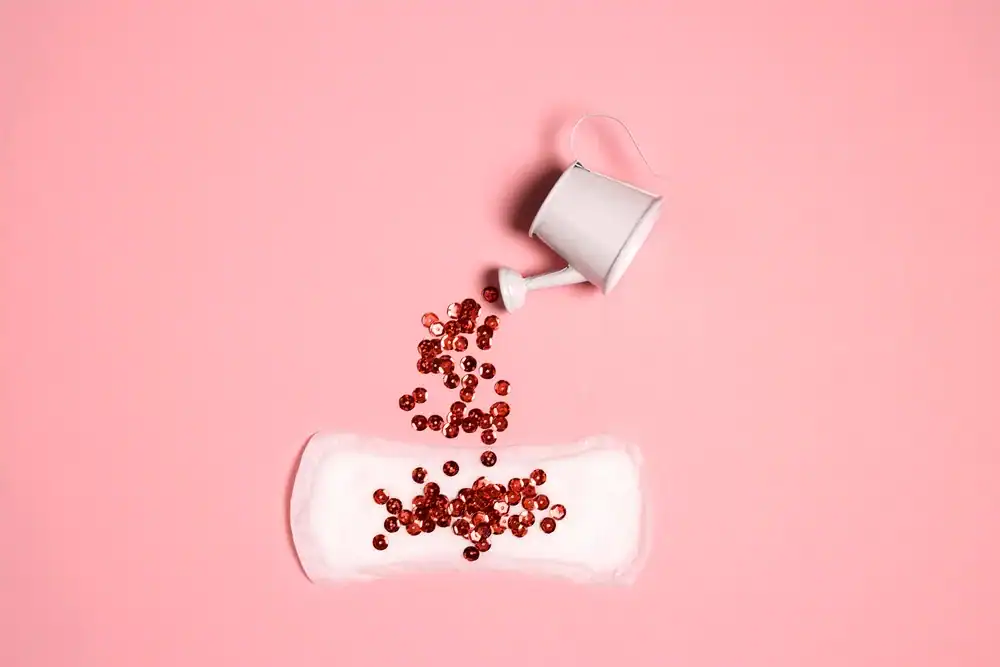
Heavy periods, also called menorrhagia, are common and thought to affect up to 30% of women of reproductive age. Did you know, on average, women lose 30 to 40 ml of menstrual blood during their cycle? But, for women with menorrhagia, this can be 80 ml or more.[5]
Dr Nisa Aslam notes further: “It’s important to remember that what you see as heavy, another woman might not. You might have heavy periods if you find you:
change your tampon or pad every one to two hours
empty your menstrual cup more frequently than recommended
pass blood clots larger than the size of a 10p coin
have to use two types of sanitary product together, for example, tampons and pads
bleed through to your bedding or clothes
have to take time off work or avoid daily activities such as exercise because of your period.”[6]
In fact, 58% of those surveyed agreed that heavy or painful periods are a valid reason to miss work.
But what’s causing your heavy periods?
“Certain medical conditions that affect your womb, hormones or ovaries can cause heavy periods; this includes endometriosis, fibroids and pelvic inflammatory disease. Often, however, there are no underlying causes to heavy periods.,”[7] adds Dr Nisa Aslam.
In some cases, heavy menstrual bleeding can lead to iron deficiency anaemia, tiredness, a lack of energy, pale skin, shortness of breath and noticeable palpitations which are common symptoms of this. Speak to your GP if you’re experiencing any of these signs as they will be able to offer the necessary support and advice.
Dr Nisa Aslam notes further: “If you find that your heavy periods have a significant impact on your quality of life, perhaps affecting confidence, being a cause of anxiety and/or even making you avoid certain social activities and events, then there’s no need to suffer in silence.”
Self-Care Help for Heavy Periods
Struggling with menorrhagia? For a heavy flow, Evana® Heavy Period Relief 500 mg tablets, for women aged 18 to 45 may help. Each tablet contains 500 mg of tranexamic acid. This is an effective, proven treatment for heavy menstrual bleeding, and can reduce menstrual blood loss (MBL) by up to 60%.[8]
Dr Nisa Aslam says: “In a usage study tranexamic acid significantly improved both menstrual blood loss and health-related quality of life in women versus placebo.”[9]
Evana® Heavy Period Relief 500 mg tablets are available over the counter, so you can access the relief you need, without waiting for an appointment with your doctor. Talk to your pharmacist to see if Evana® Heavy Period Relief 500 mg tablets are suitable for you. Always read the label.
Painful cramps
Period pain, also known as dysmenorrhoea, is a cramping pain that is usually felt in your tummy shortly before and/or during menstruation. It typically lasts for up to 72 hours and it can be felt as a dull or sharp pain. These tummy cramps can even spread to your back.[10]
Around 71% of young women[11] are said to suffer from these pains.
A hot water bottle and even gentle exercise can often help to ease the pain of cramps, but when the pain is severe and stops you living life as normal, it can be a red flag.
Dr Nisa Aslam explains: “Usually, menstrual cramps are caused by your hormones fluctuating as part of your cycle. This is known as primary dysmenorrhoea. Essentially, the uterus contracts to force blood and tissue out, which causes those cramping pains in the early days of your period.”
Secondary dysmenorrhoea on the other hand is when your period pains are caused or exacerbated by an underlying condition such as endometriosis, fibroids, having an intrauterine device (IUD) and/or Polycystic Ovary Syndrome (PCOS).
Dr Nisa Aslam warns: “It’s best to seek help from your doctor if you think there might be any underlying issues. Other symptoms that can arise from secondary dysmenorrhoea include a heavy feeling in your back and/or tummy; pain similar to period cramps that occurs at other times in your cycle; any type of severe period pain regardless of how usual it is for you; and/or pain during sex.”[12]
BOX OUT: Helpful support for period pain
When period pain stops you from getting on with your life, Ultravana® Period Pain Relief 250 mg gastro-resistant tablets may help.
Ultravana® Period Pain Relief is an effective over the counter medicine for painful periods in women aged 15 to 50. Each tablet contains 250 mg of naproxen, which is a non-steroidal anti-inflammatory drug.
Dr Nisa Aslam explains: “This type of over-the-counter medicine is used to relieve primary dysmenorrhoea – i.e. when there is no underlying cause for period pain. The tablets are also gastro-resistant, which means they’re covered with a coating which stops the tablet dissolving in the stomach, so that the naproxen is released further down in your gut” Always read the label.
It’s common to experience some pain during your period and you may also experience a heavy bleed, but when these disrupt everyday life, then it’s best to seek help.
Evana® Heavy Period Relief 500 mg tablets and Ultravana® Period Pain Relief 250 mg gastro-resistant tablets can help you get on with your day when suffering from disruptive periods. These medications are both available in the pharmacy. If you notice any new or changed symptoms with your menstrual cycle, it’s always advisable to speak with a healthcare professional. Taking the right self-care steps can help make the world of difference to your life.

