The Science Behind Invisalign: How Do Aligners Actually Work?

Share
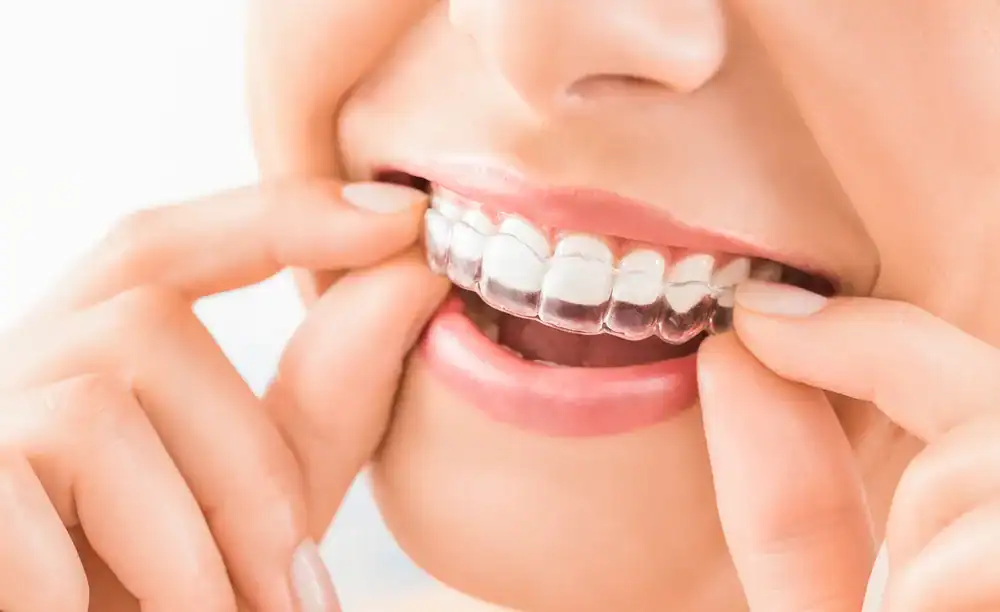
Invisalign has changed the game when it comes to straightening teeth. Instead of the old-fashioned metal braces, Invisalign offers clear, removable aligners that are way more discreet.
But how do these aligners actually work? Before parting with your hard-earned cash and investing in Invisalign… here’s all you need to know.
The Start of the Journey: Getting the Aligners
You’ll begin with a visit to an orthodontist or a dentist who knows the Invisalign system well. During your first appointment, they’ll check out your teeth and talk about what you want to achieve with your smile. If Invisalign seems like a good fit, the next step is to create a digital model of your teeth.
3D Imaging and Scanning:
This is where the tech gets pretty cool. The dentist uses a scanner, like the iTero scanner, to take detailed 3D pictures of your teeth. It’s a quick and painless process. The scanner is a small handheld device that captures thousands of images per second, creating a precise 3D model of your teeth and gums.

Digital Treatment Planning:
Once the 3D images are ready, they get uploaded to Invisalign’s software. Using this, the orthodontist can create a detailed treatment plan just for you. The software lets them plan how each tooth will move over time, making sure every aligner applies the right amount of pressure to guide your teeth into place.
ClinCheck Software:
ClinCheck is a key part of this planning. It shows a digital model of how your teeth will move with each set of aligners. You can even see a virtual preview of your new smile before you start the treatment. You’ll get to review and approve this plan before they make your aligners.
Moving Teeth with Aligners
Invisalign works on the same principle as traditional braces but without the wires and brackets. Each aligner is a little different from the last one, applying controlled pressure to certain teeth.
Gradual Adjustments:
You wear each set of aligners for about one to two weeks before switching to the next set. Each aligner shifts your teeth slightly, usually between 0.25 to 0.33 millimeters. These tiny movements minimise discomfort and help your teeth move safely within the bone.
Material and Fit:
Invisalign aligners are made from a special thermoplastic material called SmartTrack. This material is designed to be comfortable and durable. The aligners fit snugly over your teeth, thanks to the custom 3D scans. This precise fit ensures they apply consistent pressure where it’s needed most.
Attachments and Precision Cuts:
Sometimes, small tooth-coloured attachments are added to your teeth. These help the aligners grip your teeth better, allowing for more complex movements like rotations. Precision cuts can also be made in the aligners to use elastic bands, which help correct bite issues.
The Role of 3D Imaging and Modelling
3D imaging and modelling are the backbone of Invisalign treatment, ensuring everything is accurate and effective.
Detailed Mapping:
The initial 3D scan maps out your entire mouth in great detail, capturing every nook and cranny. This level of detail is crucial for designing aligners that fit perfectly and work efficiently.
Predictive Modeling:
Using the 3D model, the orthodontist can plan out your treatment from start to finish. This predictive modeling is essential for ensuring that each stage of your aligners is set up to move your teeth exactly as planned.
Continuous Feedback Loop:
Throughout your treatment, you’ll have regular check-ups. These visits allow your orthodontist to monitor your progress and make any necessary adjustments. If something isn’t tracking right, they can tweak the plan or take new scans to update your aligners.

Advantages of Invisalign’s Technology
Precision and Customisation:
The precision of digital scanning and modelling ensures each aligner is tailored to your teeth. This customisation makes the treatment more effective and can even shorten the overall time needed to achieve your new smile.
Patient Engagement:
Seeing a digital representation of your treatment plan helps you understand what to expect. This transparency allows you to feel more involved in your treatment, which can be quite motivating.
Comfort and Convenience:
Invisalign aligners are designed for comfort. The smooth plastic material means less irritation to your gums and cheeks compared to metal braces. Plus, being able to remove the aligners for eating and cleaning makes it easier to maintain good oral hygiene.
Discreet Appearance:
The clear aligners are nearly invisible, so most people won’t even notice you’re wearing them. This is a big plus for adults and teens who might feel self-conscious about traditional braces.
Is Invisalign Worth The Cash?
Invisalign’s use of advanced technology offers a highly effective and discreet way to straighten teeth. Through 3D imaging, digital modelling, and precise manufacturing, each set of aligners is custom-designed to gradually and comfortably move your teeth. This approach not only improves your smile but also makes the whole process more predictable and efficient.
Understanding the science behind Invisalign shows just how much thought and technology go into creating these aligners. For anyone considering orthodontic treatment, the combination of effectiveness, comfort, and aesthetics makes Invisalign a compelling option. With the right information and a good orthodontist, you can make a choice that fits your lifestyle and helps you achieve the smile you’ve always wanted.