
5 Delicious Meals To Cut Your Carbon Footprint

Share

Most of us consider the taste and nutritional content of our dishes when crafting our weekly meal plans. But in recent years, more and more of us are thinking about ways we can make our diets more environmentally friendly.
In fact, Deloitte’s 2022 study on consumer attitudes towards sustainability found that many of us have been practicing sustainability when it comes to food, with 69% of respondents reportedly reducing their food waste and 54% buying more seasonal produce.
The good news is that having a more environmentally friendly diet doesn’t have to be a dampener for your tastebuds. There are plenty of ways to reduce your carbon footprint while still enjoying nutritious and delicious dishes. Ahead of Earth Day on the 23rd April, recipe meal kit service The Cookaway are here to share five flavourful and filling recipes with low environmental impacts for you to use on Earth Day and beyond.
Mushroom gyros

Many of us already understand that reducing our meat intake can be beneficial for the planet, but you may not know the extent. Going vegetarian for just one day a week can save nearly 100kgs of CO2 annually, while going vegan once weekly can save up to 143kg per year (Exeter City Council). So if you don’t want to ditch meat altogether, consider having meat-free meals once or twice a week to cut down on your carbon footprint.
If you’re missing that meaty texture, mushrooms are a great alternative. As well as having a distinct chewy texture, they do a great job at absorbing sauces and spices to make a dish even more flavourful. They can be used in many different dishes, but a great one to start off with is mushroom gyros, for a meat-free twist on a Greek classic. To make this dish for four, you’ll need:
· 4 portobello mushrooms
· ½ teaspoon of oregano, thyme, smoked paprika, garlic powder, and onion powder
· 1 tablespoon of lemon juice
· 2 tablespoons of olive oil
· 4 Greek flatbreads
· Tzatziki (or a vegan alternative)
· ½ red onion, cut into thin slices
· 8 cherry tomatoes, diced
· ¼ cucumber, diced
This is a relatively straightforward recipe, making it a simple perfect mid-week meal. To make this dish:
1. Chop up your tomatoes and cucumber, slice your half onion, then mix these together in a bowl and set them aside.
2. Remove the mushroom stems, thoroughly wash them, and cut them into ¼-inch-thick strips.
3. Toss the sliced mushrooms in a bowl with your olive oil, lemon juice, and herbs and spices (oregano, thyme, smoked paprika, garlic powder, and onion powder).
4. Once the mushrooms are thoroughly coated, pop them on a non-stick frying pan and cook at a medium heat for around eight minutes. Use this time to warm up your flatbreads.
5. After the mushrooms are cooked, assemble the gyro with a layer of tzatziki at the bottom, followed by your mushrooms, and top with your tomato, cucumber, and onion mixture.
Asparagus and new potato salad
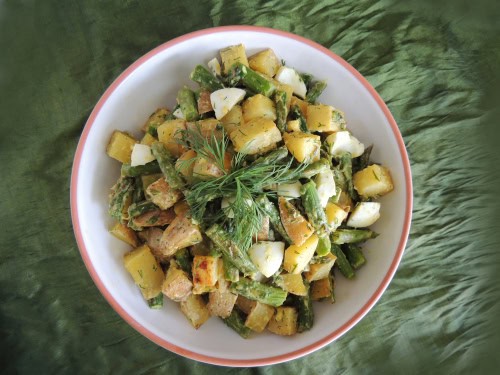
Eating seasonal and local produce comes with numerous benefits. Not only is it great for the planet as it reduces the food miles of your dish and cuts your carbon footprint, but the food also tends to be much fresher too. This can make your ingredients more flavourful, which is sure to make the dish even more delicious.
There are plenty of seasonal vegetables and fruit to choose from in the spring months, from sweet ingredients like pears and rhubarb to savoury ones, including spring onions and kale. To make the most of seasonal produce, try whipping up this fresh and tasty asparagus and new potato salad. To make four servings you’ll need the following:
· 400g of new potatoes
· 10 asparagus spears
· 40g of chopped kale,
· 2 finely chopped spring onions
For the lemon dressing, you’ll need:
· 2 tablespoons of lemon juice
· 2.5 tablespoons of olive oil
· ½ teaspoon of Dijon mustard
· ¼ teaspoon of honey
· A pinch of salt and pepper
This light and fresh dish is great for lunches, but you can also serve it at dinnertime with a protein of your choice. To make this recipe, follow these simple steps:
1. Wash your new potatoes and boil them until you can almost easily pierce them with a fork (this should be for around 10 minutes or so).
2. Drop the asparagus into the same pan and boil for a further five minutes.
3. Drain these well and pop them back into the saucepan with your chopped onion and kale, and set aside.
4. Combine the ingredients of your lemon dressing by adding them to a jar with a lid and shaking well, then set them aside.
5. Pour the dressing onto the salad and stir the mixture well to ensure everything gets a good coating, before serving.
Chorizo stew

If you’re a cheese lover and you want to reduce your environmental impact, cutting back on dairy for a couple of meals a week is a great place to start. The dairy industry is responsible for almost 3% of greenhouse gas emissions caused by humans worldwide. There are a number of reasons for this environmental impact, including deforestation, increased methane emissions, and the amount of feed required for dairy cows.
Fortunately, there are a number of dairy-free dishes to enjoy which are sure to help you forget about cheese for a couple of nights a week. This includes this tasty chorizo stew, which serves four and includes the following ingredients:
· 220g of chopped chorizo
· 800g of drained cannellini beans (usually two tins worth)
· 800g of chopped tomatoes (usually two tins worth)
· 2 onions, finely chopped
· 3 minced garlic cloves
· 1 tablespoon of tomato puree
· A handful of chopped parsley
· 2 teaspoons of smoked paprika
· 1 teaspoon of chilli powder (optional)
· Salt and pepper
If you like these ingredients and you want to give the recipe a go, simply follow the steps below:
1. Pop the chorizo and onions in a frying pan and cook until the chorizo starts to brown.
2. Pour off excess oil and add the rest of the ingredients to the pan.
3. Keep the mixture on a low heat for around 20 minutes, and serve alongside crusty bread.
Lentil ragu
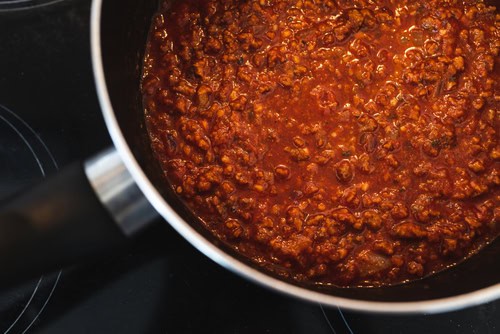
If you’re looking for a meat-free protein source, eating more pulses is a great option for you. Not only does this allow you to cut down on your meat intake every so often, but pulses have numerous of other benefits for the planet too. They don’t need nitrogen fertiliser for the soil they grow in, and they don’t require much water either: they require around just 19 litres of water per gram, compared to 112 litres per gram for beef.
A great way to enjoy pulses is in the form of lentil ragu. This is a delicious twist on an Italian classic and is sure to keep you full. To make this dish, you’ll need the following ingredients:
· 800g of tinned lentils (this usually equates to two tins)
· 800g of canned chopped tomatoes (this usually equates to two tins)
· 1 tablespoon of tomato puree
· ½ tablespoon of olive oil
· 1 onion, finely chopped
· 1 celery stick, finely chopped
· 1 carrot, finely chopped
· Vegetable stock pot
· 1 tablespoon of Herbs de Provence
· A pinch of salt and pepper
· 200g dry spaghetti
Follow these simple steps to make this tasty dish for four people:
1. Fry your finely chopped onion, carrot, and celery stick in olive oil for a few minutes on a medium heat until they start to soften.
2. Add the chopped garlic, and then add the rest of your ingredients a minute later.
3. Mix well, and leave on a medium heat with the lid on for around 20 minutes, stirring regularly.
4. While this is cooking, prepare your spaghetti in salted water according to the instructions on the packet.
5. Drain the spaghetti and serve on a plate or bowl, with the lentil ragu on top.
Wholegrain barley and vegetable soup

Wholegrains are another food which don’t come with a high carbon footprint. Like pulses, wholegrains don’t require much water to grow. Plus, it’s easy to grow a lot of these plants in a small space, so they don’t take up too much land. Not only do they do less harm, but they can actually improve the environment by absorbing carbon dioxide from the atmosphere!
So, adding more wholegrains to your diet is sure to help you cut your carbon footprint. Consider switching from white breads and pastas to wholegrain alternatives sometimes to reduce your environmental impact. And if you’re looking for more ways to incorporate them into your meals, you can use them in this wholegrain barley and vegetable soup. Here are the ingredients you’ll need for four servings:
· 440g of potatoes
· 150g of wholegrain barley
· 130g of frozen peas
· 3 medium carrots, peeled and diced
· 2 celery sticks, diced
· 1 onion, diced
· 1 tablespoon of tomato puree
· ½ tablespoon of olive oil
· ½ teaspoon of thyme
· 1 teaspoon of oregano
· 2 garlic cloves, minced
· Pinch of salt and pepper
· 950ml water with vegetable stock
Whether you’re looking to enjoy this dish at dinnertime or you’re meal prepping for your weekday lunches, use the steps below to make this soup:
1. Add your diced onion, carrot, celery, and olive oil to your saucepan and cook on a medium heat until the onion is translucent.
2. Add your barley, potatoes, tomato puree, garlic and herbs, and stir.
3. Add the vegetable broth and a pinch of salt and pepper and stir.
4. Pop the cover on and put the soup on a low heat for around half an hour. Make sure to check back every so often to stir.
5. Once all the ingredients are cooked, add the frozen peas and cook for a further five minutes. Then, simply serve and enjoy!
– Nidhi Verma, Head of Food & Founder at The Cookaway comments:
“If you’re looking to shrink your carbon footprint, evaluating your diet is a great place to start. What you eat can have a larger impact on the environment than many of us realise, and there are plenty of delicious dishes to enjoy which are more eco-friendly too, like seasonal dishes or the occasional meat-free meal.
“People looking for an easy way to cut down on food waste may want to try out recipe boxes. As they come with pre-measured ingredients this will make sure you don’t buy too much, plus you can opt for a provider with recyclable packaging to reduce your carbon footprint even further. This is a great way to try out different and exciting foods too, so you may even discover your new favourite dish!”
Is Pittsburgh the new craft beer mecca?

